
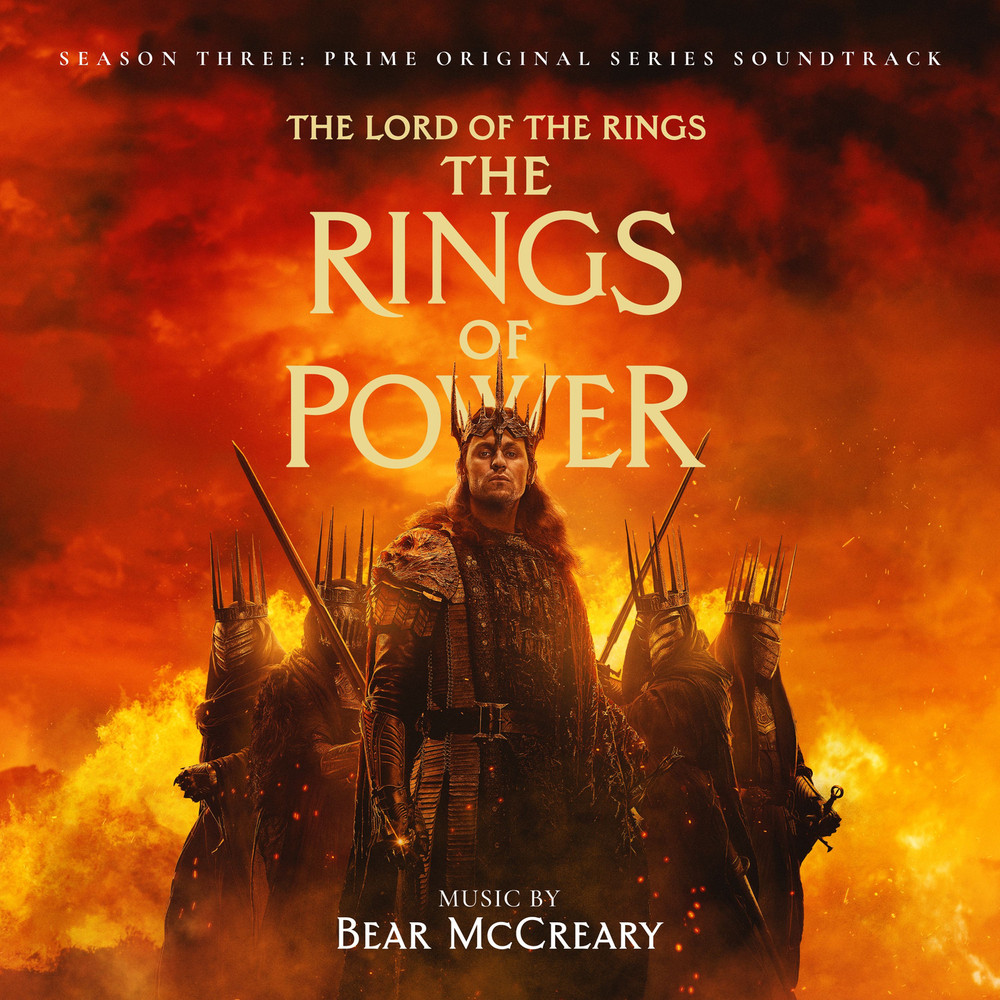
An air of orchestral darkness sweeps over The Rings Of Power for Bear McCreary’s moodier, more imposing season three score, as an aggressively metal theme for the proto-Nazgûl joins forces with the now leading Sauron’s for a decidedly malevolent new music chapter of Middle Earth.
With eager anticipation have I awaited season three of The Lord Of The Rings: The Rings Of Power, having thoroughly enjoyed the prior seasons – both in story and Bear McCreary’s score. The latter I genuinely think is his best work to date, with the composer having crafted an incredibly detailed orchestral soundscape for this prequel era of Middle Earth, one that’s positively awash with meticulous and indeed memorable themes & styles for each of the characters & settings. And speaking of which, let’s dive right into the new ones as the album for season three begins with “Morning Shall Come”, a song composed by McCreary and sung by AURORA to represent the love between Galadriel and new cast member for the season – Celeborn! AURORA’s vocals provide a gentle and aptly romantic feel to this song, with McCreary’s backing instrumentation adding a deep sense of longing and hope that really helps the cue to soar overall. This rising optimism doesn’t last though, as the subsequent “Nazgnagôl” (proto, pre-wraith Nazgûl essentially) drags the tone down into deeply malevolent orchestral aggression. Moodily chanting vocals open the four minute cue, with foreboding brass and thudding drums slowly starting to build in the background. At the thirty second mark additional and rather scream-y, death metal-styled vocals then tear tensely into centre stage alongside the growing brass, with the fiery ensemble then growing with growling emphasis until finally reaching a deafening crescendo just before the track ends.
I find myself slightly mixed on this track. The underlying new theme for the “Nazgnagôl” is very engaging in its dark memorability (much like Sauron’s from the first season) and I really enjoy that, but I’m struggling to get behind the screaming death metal part of it. McCreary did the same thing with his theme for Damrod in season two, and I actually found myself taken out of the episode when it appeared as it was so tonally and stylistically jarring compared to not just the general expected sound for Middle Earth, but also McCreary’s own score (it didn’t marry well at all with the orchestral “Battle For Eregion”). I can see what the composer is trying to do in adding a unique style to the villainous side of the music, but this particular one I fear doesn’t quite work. In my mind – and I appreciate it might not be everyone’s opinion – screaming death metal doesn’t belong with Lord Of The Rings. But anyway – “Hold Back The Shadow” then delves back into the more orchestral side of Rings Of Power as eerie strings and vocals summon Sauron’s theme back into frame in the first minute. After a brief appearance of “Where The Shadows Lie” – McCreary’s theme for the Rings themselves – echoing forebodingly on brass, Sauron’s theme then blasts aggressively once more before the three minute cue then ends on a tense, shrill cry from Nolwa Mahtar – the Elven battle theme. Upbeat strings and what sounds like a hurdy gurdy are then the focus of the rather medieval-styled “Thrain”, drawing apt inspiration from the Khazad-dûm and Durin IV themes from season one for the latest in the Dwarven thematic lineage.
“Insurrection In Númenor” reprises the usually proudly emphatic Númenor theme from season one but in now darker, troubled form. Lower-pitched brass, strings and moodier vocals do give this impeccable motif its due though, as even in more subdued style it still sounds absolutely phenomenal (and a welcome return given it didn’t feature much in season two). Sombre takes on Elendil & Isildur’s motif from season one then follow, firstly on quiet vocals before building into more determined brass atop Númenor’s proud percussion. This thematic solemnity then continues into “The Most Devoted” as Elendil & Isildur’s motif laments on serene strings in the first half, with vocalist Katrine Stenbekk then providing a wonderfully tranquil performance of said theme in the second. The now fragmented Khazad-dûm motif then marches tensely along for the percussive, brassy “Crown of Khazad-dum”, with chanting choir and drums alluding to Thrain’s new theme in the final minute until Khazad-dûm crescendos out the cue. The standout “Celeborn” is then a highlight of the third season album, with ethereal choir reprising the lovely “Morning Shall Come” motif in the track’s first seconds before orchestra then pulls it up to tremendous highs, with the utterly spellbinding crescendo it gets in the back half being absolutely incredible. Action then returns with the similarly standout “Battle At Gundabad”, as frenetic strings lead into powerfully villainous blasts of both the Sauron and “Nampat” (Orc) themes in the first minute. Coldly gutteral vocals then usher in the new Nazgûl motif, and the battle truly begins.
A fragmented Nolwa Mahtar darts anxiously between tense strings, pounding drums and chanting Elven-styled choir for the next few minutes before Galadriel, Celeborn and Arondir’s themes then all charge dramatically into frame for a powerful orchestral moment. This thematic powerhouse sadly then splinters quickly, with ominous hints toward Sauron’s theme drowning the action in eerily vocal-led malevolence until the seven minute track fades out. Low-pitched, imposing brass and ominous vocals then arrive for the boisterous “Fell Beast” with Nampat-styled war percussion emphasising the growing orchestral darkness in the back half, before we return to the eerily high-pitched choral sound of Rhûn (from season two) for “Mûmakil On The March” with Middle Eastern-styled instrumentation and thudding drums also centre stage. A rather grandiose Elendil & Isildur’s theme then returns for the start of “Under Sun and Star”, though over the course of the track’s seven minute runtime it slowly fades, becoming almost sorrowful on strings before finally quieting to a close. Sophia Nomvete – Disa’s actress – then gives a sublime vocal performance for the downtrodden “Searching In Stone”, singing serenely atop moody percussion in a similar manner to “A Plea To The Rocks” from season one. The tone then brightens somewhat for the opening of “For Gerda and Gamli” as Durin IV’s boppy motif (also from season one) returns on sprightly strings, though – much like “Under Sun and Star” earlier – it too fades into wariness for the cue’s final minutes alongside the now similarly uneasy Khazad-dûm theme.
Ominous strings occupy much of “The Balrog”, reprising the motif from “Fell Beast” earlier with Sauron’s ever-malevolent theme also cutting in every so often on eerie brass. The mammoth “Sammath Naur” then continues where this leaves off, with both the Sauron and Fell Beast motifs intertwining ominously on quiet strings and vocals in the first two minutes before thunderous brass suddenly crashes into centre stage. From here the orchestra simply goes villainously ham, with Sauron’s theme leading a tremendously tense action charge together with chanting interspersions of the Nazgnagôl motif until the Where The Shadows Lie/Rings theme finally arrives on moody choir. “One For The Dark Lord” then brings all this build-up to a phenomenal crescendo, with Sauron’s theme surging in brassy triumph for the first minute. After dramatic drums then pair with a sublime vocal rendition of the Rings theme, the “One For The Dark Lord On His Dark Throne” line thunders together with one final and utterly victorious take on Sauron’s theme to crescendo out this brilliantly standout cue. Genuine shivers! To close out this quality quartet, “Embarking From Barad-dur” then features ferociously brassy and vocal renditions of both the Sauron and Nazgnagôl themes throughout its runtime, now entangled in delicious orchestral malevolence. After some rather ethereal string renditions of the “Morning Shall Come”/Celeborn theme in the first half of “Echoes Of Ancient Music”, Galadriel actress Morfydd Clark then sings a sublime vocal take on the motif for the final minute of the cue.
With the album rapidly approaching its end, nine minute setpiece “Gandalf and the Dark Wizard” features the only appearance of the Grey Wizard’s theme on the album as it goes orchestrally head-to-head with both Ciaran Hinds’ malevolent character and the ever-screamy Nazgnagôl theme on a backdrop of eerie Rhûn-styled vocals (and even a short woodwind hint towards Nori’s motif from season one). A rather unnerved Númenor theme then opens “The Doom Of Men”, with ominous brass giving a distinctly off feeling for the first few minutes despite the grandiosity of the motif. As the cue continues Sauron’s theme then starts to echo in the background on high-pitched vocals, growing in strength with Númenor’s theme faltering until a decidedly mournful strings reprisal finally closes out the track alongside echoing church bells. To close out the album and cement the dramatic impending feeling of defeat, a solemn children’s choir then reprises the “Where The Shadows Lie” theme – one last bout of villainy before fading the score to silence.
Overall, Bear McCreary’s score for season three of The Lord Of The Rings: The Rings Of Power takes a much more malevolent turn compared to prior seasons, with Sauron’s theme now firmly in centre stage. Joining it in the thematic driving seat too is a growling, ominous new theme for the Nazgnagôl (proto-Ringwraiths), an engaging and dramatically memorable piece that would be perfect if it wasn’t for the screaming death metal vocals that accompany it (not always, thankfully). Still, both these themes together result in some delightfully dark action scoring with standout setpieces like “Battle At Gundabad” and the incredible four track build-up to Sauron’s forging of the One Ring (“The Balrog”, “Sammath Naur”, “One For The Dark Lord” and “Embarking From Barad-dur”) being some of the best villain music composed for the show so far. I would just like to hammer home that point, as Sauron really is the star of this season – as all the Charlie Vickers-fronted posters have suggested really – with further tracks like the phenomenal “Hold Back The Shadow” and “The Doom Of Men” also highlighting just how well composed and versatile McCreary’s theme for the character is. That said, this dominance does come at the cost of other themes The Rings Of Power has to offer; Celeborn for example gets a gorgeously serene new motif that features little outside his dedicated cue, and established ones like Galadriel, Elrond and Gandalf’s take a significant backseat (Galadriel’s for example surprisingly appears only once here), making you wonder, given how prominent these characters are in the season’s trailers, whether this ninety minute album is perhaps missing a sizeable number of significant cues.
I suppose only time will tell with that. For now, we have a delightfully Sauron-led new soundtrack season for The Rings Of Power, and if you enjoy his theme as I do – you’ll likely love this.
Score: 8.5/10
Standout Cues: Celeborn, Battle at Gundabad, Sammath Naur, One For The Dark Lord
Buy Bear McCreary’s score for season three of The Rings Of Power on the Amazon Store!
(note this is a sponsored link)

Follow me on Twitter for the latest soundtrack and review-based news!

Leave a Reply