
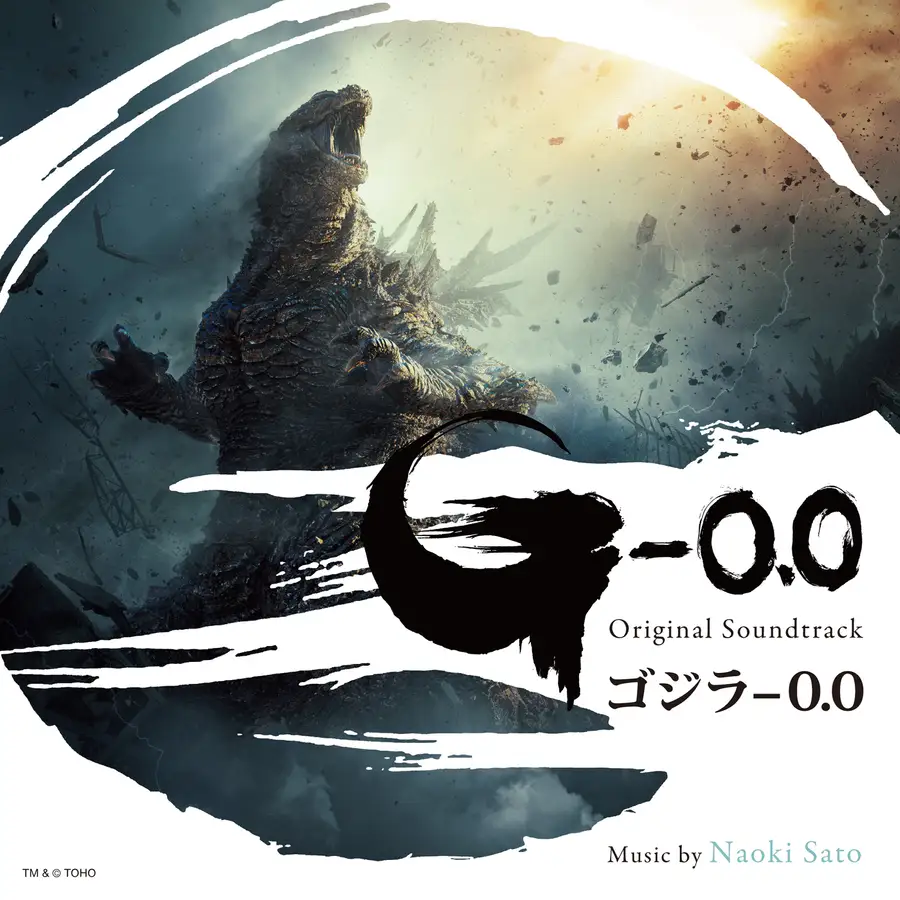
Naoki Sato continues the darkly imposing sound of Godzilla Minus One pretty rigorously with their score for sequel Minus Zero, but between the intense reliance on eerie atmosphere and straight re-recordings of some cues, there’s just not a lot to remark on compared to the first score.
Composer Naoki Sato crafted a dark, eerie and dramatically aggressive orchestral soundscape for 2023 monster movie Godzilla Minus One, an approach that made the score’s nobler, almost heroic moments – in the few instances where they did appear – stand out immensely. Standout Cue “Resolution” for example held grandiose, determined strings as its stylistic centrepiece, endlessly repeating and resolvedly building to represent the hope and heroism of the human characters as they fought against the iconic titular Titan in the film’s dramatic climax, and it sounded absolutely incredible as a result. As such, when Sato was announced as returning to score this year’s sequel film Godzilla Minus Zero I was absolutely intrigued to hear what new orchestral triumph they had cooked up for us (as that aspect was my favourite part of the 2023 soundtrack) or, failing that; what delicious new stylistic darkness we’d hear for Godzilla himself. Now the wait is over and here we are, so let’s begin with Minus Zero‘s opening cue “Eclipse”; Sato wastes no time at all in re-establishing tension for the sequel here, as high-pitched and ominously in-your-face strings start to repeat in moody bursts. As the track continues the strings then slowly build, becoming increasingly louder and more imposing with similarly aggressive bursts of brass and organ notes also joining, until the ferocious ensemble finally crashes out at just past the five minute mark. All-in it’s a decidedly atmospheric and indeed very dramatic start to the new Godzilla soundtrack, and one thing’s for sure; Sato’s imposingly malevolent soundscape for the Titan is certainly back.
A high-pitched sense of unease is the focus of the two minute “Witness” with shiver-inducing strings in centre stage, before “Contingency” then quietens things considerably with low volume, calming atmosphere for most of its runtime until the eerie organ notes and brass from earlier pick up for a dramatic crescendo towards the end. Moody vocals then occupy “Remnant”, echoing in an ethereal, almost quasi-religious style in the first half before slowly building in grandiosity and to almost deafening tension in the second. After a simmering bout of unnerving atmosphere in the four minute “Bearer”, our first hint of orchestral hope then arrives in the rather serene “Burden” as soft, almost mournful strings take the stage throughout the deeply forlorn cue. The six minute “Narukami” then opens quietly but the eerily unnerving side of the score is certainly now back, with ominous strings gradually growing in both volume and intensity until a thudding percussive pace emerges in the back half with deep, growling swathes of electronics rising and falling until finally crescendoing out. The lengthy “Resonance” then returns to the quietly simmering atmospheric style from earlier for much of its whopping eight minute runtime, only breaking from it a couple times in the back half to deliver shrill, in-your-face blasts of incredibly tense strings, brass and organ notes. The subsequent “Devotion” then offers a similar runtime but with a thankfully calmer aesthetic, as tranquil strings evoke the uneasy hope of “Burden” once again, building to a series of gorgeously orchestrated crescendos until finally fading solemnly away.
Repeating and increasingly aggressive excerpts from Akira Ifukube’s Godzilla theme open “Possession”, swirling and building with rising tension until tremendous crashes of angry vocals, organ and brass finally overtake, all practically screaming in sheer orchestral fury until cue’s end. Strings-focused serenity is then once again central for “Fortitude”, and the way the longing instrumentation then marries with mournful choir in the back half is something to behold as it’s absolutely breathtaking in style. After a short bout of string ethereality in “Farewell”, Sato then returns to the music of Minus One with tracks “Divine” and “Resolution”; the former blasts the composer’s aggressively brassy material for Godzilla himself from the similarly titled “Divine” from Minus One across five minutes, and the latter is then in essence a re-recording of the superb track of the same name from the first score – it’s great to hear it again, but it still remains the same cue (and honestly, I prefer the recording from Minus One). “The Road Ahead” is then a slightly more interesting setpiece, coming in at an incredible thirteen minutes long, as it essentially takes the repeatingly grandiose motif from “Resolution” and builds it in a slower, more determined fashion – with the choir-led crescendo at the end being utterly spellbinding in its deafening splendour. Final track “Godzilla Suite” is then exactly what it says on the tin, a bombastic new recording of Ifukube’s iconic Godzilla theme with aggressive brass and thunderous orchestra delightfully abound.
Overall, I’m rather torn on Naoki Sato’s score for Godzilla Minus Zero. On the one hand, the composer’s talent for incredible orchestrations is notably apparent – as it was for Godzilla Minus One – and that results in some genuinely breathtaking moments on this new album, but on the other I wouldn’t say there’s as much that stands out with Minus Zero compared to the previous score, and what does is mostly taken from Minus One anyway (like “Resolution”). For that first point, the standout orchestrations – I really like the forlorn strings work that presumably represents the efforts of the humans in the film itself, featuring through serene cues like “Burden”, “Devotion” and the standout “Fortitude”, and the unnerving building tension through “Eclipse” is also pretty great. For the latter point though, I am a bit disappointed that Sato reprises the impeccable “Resolution” from the first film but doesn’t do much with it, simply re-recording the cue in one instance then just featuring it elongated through the lengthy “The Road Ahead” (the crescendo at the end of that track is amazing in fairness, but it takes a genuine age to get to it). So all-in, I can’t say I’m as hugely wowed with the music for Minus Zero as I was with for Minus One. Points for orchestrations, but reprises and ambience are all this sequel really is for me.
Godzilla Minus One‘s soundtrack is still pretty great though.
Score: 7/10
Standout Cues: Fortitude, The Road Ahead
Buy Naoki Sato’s score for Godzilla Minus Zero on the Amazon Store!
(note this is a sponsored link)

Follow me on Twitter for the latest soundtrack and review-based news!

Leave a Reply