
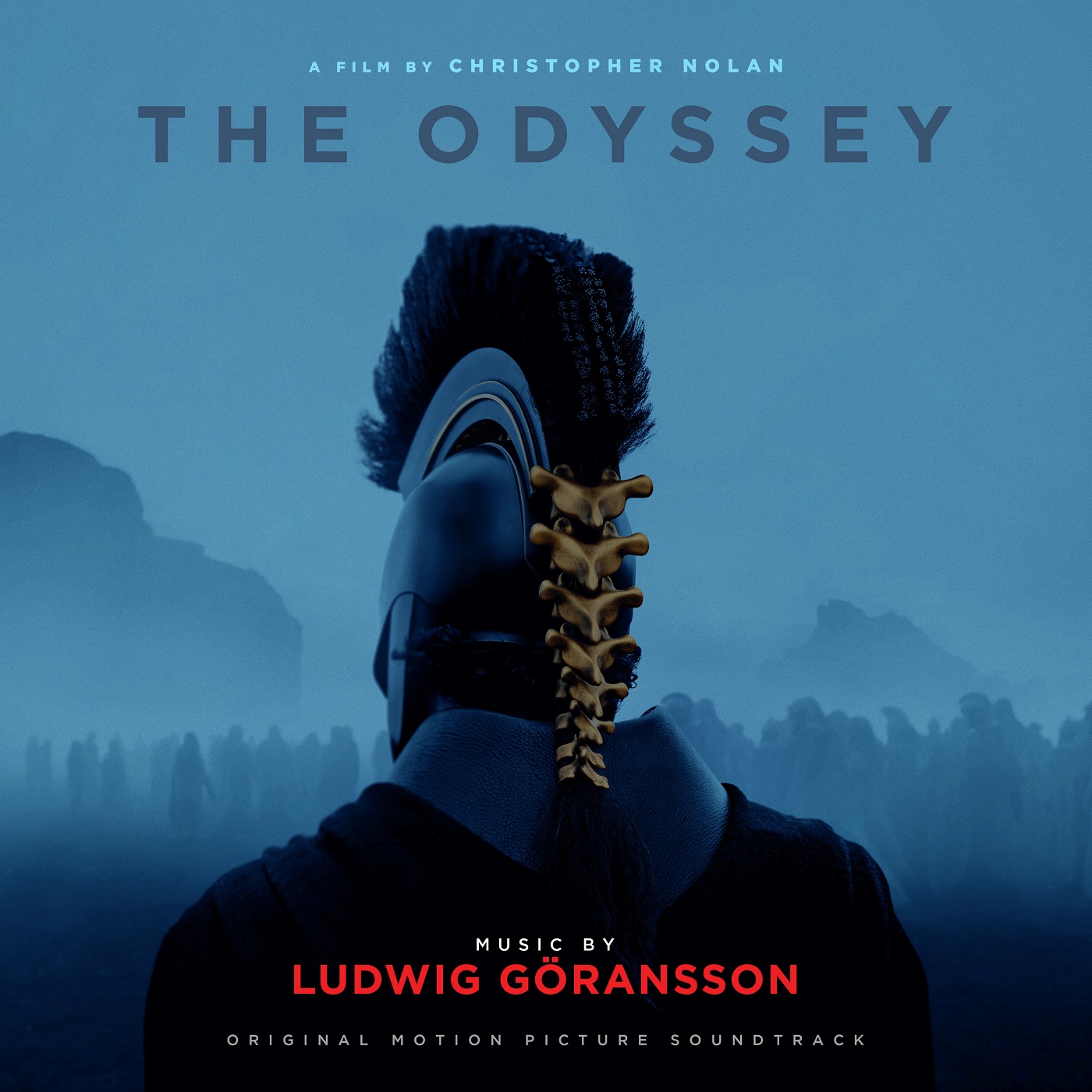
Ludwig Göransson’s The Odyssey makes for a challenging listen at times, with dramatically distorted synth & harsh electronics hammering home the tension of Odysseus’ journey. But in its bolder moments where melancholy lifts themes into rippling vocal hope – it’s utterly spellbinding.
It’s been a curious wait, anticipating the score for upcoming Christopher Nolan epic The Odyssey. Composer Ludwig Göransson’s unique approach to sound and orchestration in film has always made his music intriguing, and given the classic Ancient Greece tale that the new movie is based on, it’s absolutely ripe for an incredible soundtrack. That said, I must admit I was made a little wary by this Time article, as apparently Göransson was instructed not to utilise an orchestra for The Odyssey as “it’s not like the orchestra existed back then”. I mean… sure. I can see what they’re trying to do, building a truly unique approach to the movie’s music that no one has done before (and having Göransson on board experimenting with ancient instrumentation like bronze gongs and the lyre will only amplify that idea) and I admire them for it, but I won’t lie – it is a little disappointing knowing we’re not going to get a big Ancient Greece-inspired orchestral score a la James Horner’s Troy. Still, I always try to keep an open mind with this kind of thing, so let’s not judge any further until we’ve really dug into this now finally released soundtrack.
The two hour album for The Odyssey begins with “Zeus’s Law”, and the track gets off to a curious start as coldly echoing hits of percussion and eerie, slithering synth enter the fray. With a growing feeling of dread abound, pounding drums suddenly introduce tense vocals that shout with fervent emphasis “A Face! A Fleet! A War! A Man! A God! A Trick!” with the dramatic instrumentation suddenly cutting out just as the final word is yelled. Slowly, the coldly echoing atmosphere of earlier then builds back up, simmering moodily until ominous string twangs finally close out the three and a half minute cue. Somewhat warmer woodwinds then open “Ithaca”, swirling and flurrying around gentle string plucks that introduce the first of Göransson’s Odyssey themes, a four-note descending piece. This rather melancholic motif leads tranquil ambience through much of this six minute cue, though some creepy surges of low-pitched synth restrain it from too much optimism. The subsequent “Penelope” then introduces another, much more delicate and mournful theme that echoes wistfully on quiet woodwinds. After a period of moody synth, dramatically war-like drums then close the track with a determined reprisal of the Ithaca motif intertwining with the serene new Penelope theme on its now seemingly signature woodwinds.
All-in, it’s an intriguingly dark sound for The Odyssey so far. The themes are nice – I particularly like the wistful nature of Penelope’s – as is the use of strings and woodwinds, but as you might have guessed if you’ve read one of my reviews before; I’m not a big fan of the moody synth and electronics. It feels odd in an Ancient Greece movie, and I hate to say it Mr. Nolan – orchestras didn’t exist back then, but neither did synthesizers. And speaking of synth; “Telemachus” up next winds and echoes rather wackily with an almost Blade Runner aesthetic for much of its runtime until being overtaken by pounding drums, serene strings and deeply emphatic vocals in its final moments. The coldly simmering atmosphere of earlier then returns for “Calypso/Agamemnon” and “Let’s Go Home”, with creepily high-pitched vocals and murmuring electronics at the forefront in the former and dramatic drums pounding against moody synth in the latter. The electronic creepiness is then dialed up to eleven in the lengthy “Cyclops” with dissonant synth pulsing up and down opposite horror-like flares of strings until a loudly in-your-face percussive crescendo closes the track. Deep, foreboding vocals are then the centrepiece of “Menelaus, Husband Of Helen” with forlorn strings hinting toward the Ithaca motif at the halfway mark.
An increasingly tense, aggressively rising rhythm occupies the six minute “Troy” with driving drums, anxious strings and dramatically distorted electronics all in play. The subsequent “Laestrygonians” then builds on this utter instrumental anger with chanting vocals and the volume dialed up to deafening levels, making for some increasingly anxious action until the tide finally starts to turn at the two and a half minute mark with a new and rather determined theme for Odysseus himself charging not quite heroically, but certainly emphatically against the warring synth with the four note Ithaca motif in sublime vocal tow. The nearly eight minute “Circe” then seethes with eerie electronic ambience throughout its runtime, with the music then taking a much darker but similarly atmospheric tone with “Hades” as tense stabs of pulsating, distorted electronics and dramatically low-pitched vocals represent the titular God of the Underworld. Shrill choir is then central for “Sirens”, though this enchantingness quickly fades in favour of hair-raising synth and woodwind-focused ambience with the quietest melancholic hints towards Odysseus’ theme. “7 Years” then continues this focus on ominously shrill vocals, though now thudding against wary percussion and strings.
A standout moment arrives with “Another Name” as Penelope’s theme practically soars on uplifting choir, with Odysseus’ joining it from the forty second mark alongside pounding drums and the four-note Ithaca motif. After said motif faces a dramatic brush with throaty choir and war drum-focused action in “Bringing It All”, the lengthy “Odysseus” offers a focused take on the title character’s solemn theme and the Ithaca motif atop quietly pensive woodwinds and sorrowful strings at first before then building to a powerfully percussive action sequence with vocal chanting abound. As the album approaches its end, the climactic “The Trial Of The Bow/Vengeance” opens warily with echoes of ominous synth and plinking percussion before action practically explodes at the three minute mark with pounding drums, eerie vocals, woodwinds and distorted synth all building to an intensely deafening and honestly rather abrasive crescendo. Final cue “Chasing The Escaping Sun” then opens with a wistful vocal rendition of Penelope’s theme before shifting into the Ithaca motif, and at the two minute mark some rather uplifting synth then echoes notes from Odysseus’ theme alongside the chanting from the album’s opening track, bringing the score full circle before dramatically crescendoing out.
Overall, Ludwig Göransson’s score for The Odyssey is a deeply melancholic and rather haunted affair with synth and sorrowful strings at its forefront, so a far cry from the dramatically grandiose orchestral soundtrack you might expect from an Ancient Greece-influenced summer blockbuster. That’s not necessarily a bad thing in concept, as it’s always good to be different, but this particular effort while admirable in its dramatic quest to be orchestra-less and utilise Ancient Greek instruments like the lyre and bronze gongs, just doesn’t quite hit the masterful mark for me.
But let’s start with it’s best feature; the themes. There are several, and they’re quite good; Odysseus himself gets a serene and rather regretful piece heard best in the powerful “Odysseus”, with his wife Penelope getting a similarly solemn motif that sways with deep longing through its own sublime track “Penelope” as well as the standout and uplifting “Another Name”. There’s also a simpler four note piece to present Ithaca itself, which usually accompanies Odysseus as he journeys back there (“Laestrygonians”). However while the themes are solid, they’re entrenched in this dour and deeply melancholic sound formed from downtrodden vocals, serene strings and echoingly mournful percussion that while enjoyable the first few times you hear it, gets a bit repetitive after a while. And outside of those themes, the score mostly just consists of dramatically ominous synth and electronic-focused ambience that could really be from any modern film score, and it’s quite difficult to listen to in its harsher, more dissonant segments too.
All-in, this means that while this score does have its genuinely spellbinding moments (Odysseus and Penelope’s themes being the best of the bunch there) I’m hard pressed to say I really liked it. It’s all right. I’m sure it works very well with the film itself, but on album – it’s difficult to elevate it above that. But that’s just what I think – do check out “Odysseus” below and judge for yourselves!
Personally though, I preferred Oppenheimer.
Score: 6.5/10
Standout Cues: Another Name, Odysseus
Buy Ludwig Göransson’s score for The Odyssey on the Amazon UK or US store!
(note these are sponsored links)

Follow me on Twitter for the latest soundtrack and review-based news!



Leave a Reply