
The enthusiastic enjoyability of Atsuko Asahi and team’s score for Mario Kart World knows no bounds, with an upbeat Americana-infused, offroad-y orchestral style, a delightfully catchy main theme and some utterly gorgeous Rainbow Road cues making it an absolute series highlight.
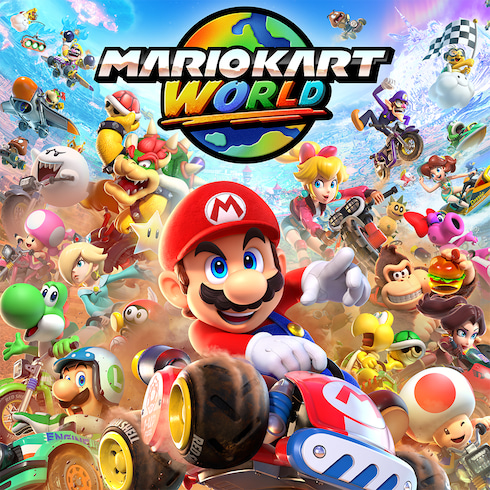
Now this one’s been a long time coming! Mario Kart World released on the Nintendo Switch 2 platform in June last year, and ever since it has been with eager anticipation that I (and a great many others) have awaited the release of Atsuko Asahi and team’s soundtrack for the game. The reason? Their music is absolutely spectacular; drawing stylistic inspiration from the Americana sound with harmonicas and banjos in centre stage (to represent the game’s open world setting) as well as having an unapologetically upbeat, joyful tone and a catchy main theme to boot, there’s simply so much to love with World‘s score, and finally (just in time for the game’s one year anniversary) Nintendo have now released an album on Nintendo Music! It’s not complete, mind you – the cues for freeroaming around the open world are going to be added sequentially in future updates – but the main circuit tracks are all there, including my personal favourite section “Rainbow Road” (which we’ll get to later) and of course the game’s main theme. It amounts to over a hundred tracks and more than four hours of music in total, but if you’re wanting a more trimmed down version there’s also a “Top Tracks” playlist on the Music app, and that’s what I’ll be reviewing today. So without further ado – let’s get stuck into this soundtrack!
First up is the main theme, introduced through the ninety second “Title Theme”; a rumble of drums gives way to a veritable explosion of enthusiastic orchestral fanfare in the cue’s opening seconds with a boppy harmonica, blasting brass, soaring strings and pounding percussion all urging the new theme happily along throughout its catchy debut. Major props to Asahi and team here, this piece is incredibly well made; upbeat, memorable and sticking in your head instantly, they’ve got both thematic structure and style absolutely nailed already – and it’s just the first track! Up next, “Mario Bros. Circuit” continues the jovially harmonica-focused jive (with a big focus on said instrument as the player goes absolutely wild with it at points) backed by a boisterous orchestra that never flounders in fast-paced enthusiasm throughout the track’s two minute runtime.”Crown City” then leans into jazzier territory with head-bopping brass playing centrally alongside light percussion, before “Whistletop Summit” switches things up stylistically again; this time with a folkier focus as a sprightly banjo and chanting vocals leap and intertwine delightfully all across the track. We’re then treated to a two-pair in “DK Spaceport” and “DK Spaceport (Final Lap)”, with the former furthering the jazzier agenda with upbeat brass and electronics before the latter descends into pure chaos with an absolute (and very entertaining) orchestral frenzy.
A dramatically Indian-styled tone occupies “Desert Hills”, with what sounds like a sitar in centre stage accompanied by flurrying strings and boppy backing beats. The similarly styled “Shy Guy Bazaar” then leaps happily along with the same enthusiastic sitar and percussion combination, before an electric guitar thunders into centre stage for the three minute “Wario Stadium” to lead an emphatic pace together with head-nodding brass and crashing drums. Said electric guitar also throbs underneath the frenetic “Airship Fortress” up next with pounding percussion and ferocious harmonica hinting back toward the Americana sound from earlier, with the subsequent “DK Pass” then leaning into this tone heavily with an enthusiastically upbeat folk instrument-filled style. Twinkling percussion then kicks off “Starview Peak”, with some rather ethereal electronics dancing in wonder throughout the track’s two minute runtime alongside hopeful strings. After a burst of strings-focused optimism in the rapid “Sky-High Sundae”, “Wario’s Galleon” then plunges the score into darker, more ominous territory as a low-pitched electric guitar leads a tenser orchestral ensemble (though the fun element is still very much present). “Koopa Troopa Beach” then leaps right back into happy head-bopping territory with enthusiastic synth and some rather tropical-sounding percussion, with “Faraway Oasis” afterward continuing in a similar stylistic vein with the addition of more heroic-sounding brass and vocals.
The Princess Peach-focused pair “Peach Stadium” and “Peach Beach” practically soar with orchestral enthusiasm as the former features jazzy brass and upbeat harmonica joining stylish forces, and the latter bops happily along in a return to the tropical sound alongside steel drums. “Salty Salty Speedway” then takes us on a trip to Europe with an upbeat accordion and cheery strings as a focus before the electric guitar from earlier reprises alongside bombastic percussion for “Dino Dino Jungle”. Fluttering woodwinds are happily central through the rapid “Great Block Ruins” with a catchy motif held high throughout before the tone then turns rather wistful – in a racing kind of way – for the Japanese-styled “Cheep Cheep Falls” with high-pitched woodwinds, an electric guitar and bombastic percussion surging dramatically along (despite the rather oddball instrumental combination though, it really works). Frantic guitars are then in charge through the furiously fast “Dandelion Depths”, though this excitement then gives way to an air of downright spookiness in “Boo Cinema” as eerie harpsichord notes and string plucks overtake for the two minute cue. Frenetic piano then opens “Dry Bones Burnout”, with jazzy saxophones and an accordion leaping along before country music arrives for “Moo Moo Meadows”, delivering a standout moment with dancing strings and foot-tapping percussion all delightfully centre stage.
Mario Kart World turns thunderously metal for the deafening “Choco Mountain” as an emphatically in-your-face electric guitar crashes furiously along together with aggressive drums. Big, emboldened brass and smashing cymbals then leap jazz back into the fray for the fast-paced “Toad’s Factory” before loud, heavy metal-styled villainy overtakes afterward for the insanely frantic “Bowser’s Castle” as the crashing electric guitar and drums return. The folk style of earlier then makes another appearance in the enthusiastically plucked strings and woodwinds-led “Acorn Heights”, with the subsequent though short “Mario Circuit” then leaning back into boppy jazz – but it’s after this point that the real magic (at least for me) finally happens as the synthy “To Rainbow Road” starts to tease a rather ethereal, space-y finale to the score. This is then fully realised in a triumphant quartet of cues, with opener “Rainbow Road” introducing a brand new Rainbow Road theme that happily debuts on enthusiastic synth, swirling brass and boppy beats. “On The Water” then turns the tone tranquil as lightly quieter percussion, synth and vocals deliver a peacefully serene take on the new Rainbow Road theme, though things don’t stay slow for long as “Space Station” ups the pace with a funkily electronic, head-boppingly ’80s rendition of the Rainbow Road theme with an electric guitar also enthusiastically central.
Things then all come to a head for “Finale” as the Rainbow Road theme roars into central stage with a full orchestra now mightily at its back, resulting in a truly breathtaking three minute playthrough with beautifully played and delightfully upbeat brass and strings holding the new theme proudly high throughout. As if things couldn’t get any better, final and Standout Cue “Staff Credits” then delivers a superbly crafted five minute and fully orchestral suite of World‘s thematic highlights, with several smile-inducing appearances by the harmonica-led main theme and a gorgeous reprisal of “Rainbow Road” being the highlights for me, though honestly there’s no denying just how well the entire ensemble flows in delightful orchestral harmony here. All-in, it’s a pretty perfect way to end this amazing album.
Overall, Atsuko Asahi and team’s score for Mario Kart World is an absolute blast. It’s biggest asset is its orchestral style (or should I say styles, considering the sheer amount of them on show here), with the leading harmonica and banjo-infused Americana sound used to cement the game’s open world, offroad-y setting being of course the absolute highlight. The way the rest of the album then leaps seemingly effortlessly through a wide array of other styles without missing a beat (the folk-focused “Whistletop Summit”, the ethereally Japanese “Cheep Cheep Falls” and the impeccably metal “Choco Mountain” are a tremendous trio of examples there) is a fantastic achievement, as is the enormous talent being showcased through the meticulous orchestrations of every track (like “Staff Credits”, the sheer number of stylistic switch-ups and thematic references in there is mindblowing). Speaking of themes, the score is led by a boppily memorable main theme showcased through the opening “Title Theme” on the album’s leading Americana instruments, as well as through a variety of further appearances including the standout end credits cue. Bar that, each racing area is also led by its own little catchy motif, with the highlight – for me personally, yours may differ – being the gorgeously space-y “Rainbow Road” section.
The entire four track segment is lovely, but the way the “Finale” cue in particular leaps in sheer triumph as the last lap of the Road unfolds before you in the game is simply spellbinding, and that leads me to one last point here – just how happy this entire album is. It’s so boppy and upbeat, and the joyful instrumentation showcased through every track never fails to make me smile. It’s so warm and cheerful, and I can’t express just how enjoyable that makes this score.
Score: 8.5/10
Standout Cues: Title Theme, Mario Bros. Circuit, Rainbow Road (all cues), Staff Credits
Check out Atsuko Asahi & team’s soundtrack for Mario Kart World on Nintendo Music!

Follow me on Twitter for the latest soundtrack and review-based news!



Leave a Reply