
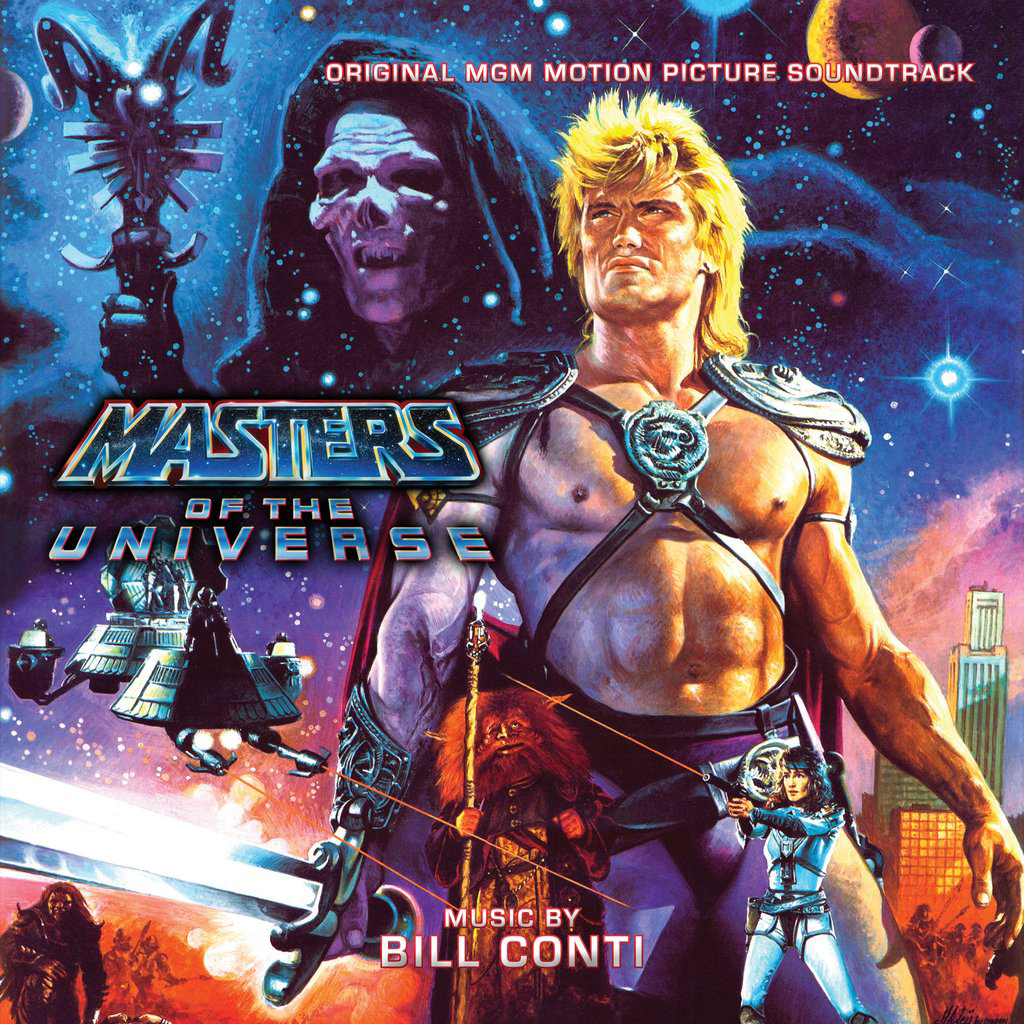
Bill Conti’s unapologetically bombastic score for the Dolph Lundgren-led Masters Of The Universe movie is an absolutely stellar affair, boasting an enthusiastic array of memorable themes and an orchestral style that (while clearly a little inspired by Star Wars) entertains all across the album.
I actually watched the 1987 Masters Of The Universe movie – starring Dolph Lundgren as He-Man – for the first time the other day, and I absolutely loved it. It’s silly, don’t get me wrong, but there’s just something so heartwarming and enjoyable about it. It doesn’t try to be anything more than it is, a wackily ’80s adventure movie with captivating action (that admittedly borrows heavily in tone from Star Wars) and some solid characters, particularly the fantastic villain performance from Frank Langella as Skeletor. And one of the film’s most intriguing aspects – hence the existence of this review – is Bill Conti’s score. You can tell he had fun with this one, filling it to the brim with themes and holding nothing back with a big, bold, brassy and unapologetically boisterous style that – much like the film itself – is clearly also inspired by Star Wars as well as Superman (the heroic works of John Williams, essentially). This doesn’t make it bad though – if anything, it actually makes it tremendously entertaining. Take the main theme for example, which arrives in the opening moments of “Main Title/It’s All Mine”, the first cue on Notefornote Music’s expansion of Conti’s score; it leaps triumphantly into centre stage right away on proudly deafening brass and crashing percussion, becoming an earworm instantly as Conti happily parades it on thunderously upbeat orchestra. There’s something just so joyful, so happily superheroic about this theme, with absolutely nothing restrained – and a result, I fell in love with it pretty much immediately.
As the cue continues however, the memorable main theme fades in favour of a darker, more malevolent new sound; for Skeletor himself. Dramatically marching brass (that’s rather reminiscent of Williams’ style for the Empire in A New Hope, I might add) blasts through, debuting Skeletor’s villainous motif with frantic strings-led action anxiously following. At just before the three minute mark however the music then slows, debuting a quieter, more wistful motif on woodwinds for the Sorceress, protector of Eternia. After a brief, more upbeat hint back towards the main theme, the marching brass of Skeletor returns and reigns supreme for the next minute or so until the main theme finally regains the upper hand right at the end, ending the five minute cue on a rather hopeful woodwind and percussion-led note. The marching drama of Skeletor however continues to lead tense action in the first minute of “Quick Escape”, with things then settling slightly as the Sorceress’ motif reprises on forlorn woodwinds before Skeletor rears percussively again to bookend the track. Building brassy tension then reaches fever pitch at the start of “Battle In Greyskull” before a new and delightfully majestic motif then debuts for the Cosmic Key; after soaring on triumphant brass and twinkling percussion though, the Key theme fades as quickly as it arrived to allow an anxious main theme to lead roaring action to cue’s end.
The score settles for a moment at this point with the quieter, more ambient “To Earth” and “Where’s The Key”, before a gorgeously strings-led rendition of the Cosmic Key theme floats serenely through “The Cemetery”. Hints back toward militaristic percussion and brass then simmer through the minute-long “Getting A Bearing”, with Skeletor’s theme also reprising moodily in the subsequent “The Mercenaries”. Mammoth action setpiece “Battle At The Gym” then sets an eerie tone in its opening minute with bursts of aggressive brass before leaping into ferocious thunder with a villainous new action motif in central stage, circling and stabbing relentlessly through a continual barrage of emphatic orchestra. Skeletor’s theme then returns with anger in the tense “Skeletor’s Wrath” on surges of sulky brass, leading to an emphatically grandiose march atop crashing percussion through “Evil-Lyn To Earth”. Flurries of worrisome strings and brass then open “Kevin’s Plight” together with hints toward both the main and Skeletor themes, with this rising tension continuing into the subsequent “It’s Them!/Centurion Attack” as wary bursts of brass, frenetic strings and thudding drums lead a dramatic and excellently orchestrated pace. The music then slows for the gentler “Julie Sees Mom/Julie Takes The Key” with a sweeping rendition of the Cosmic Key theme, before a marching introduction to a motif for Evil-Lyn then surges emphatically in-your-face action back into centre stage.
Action practically explodes to the forefront in the masterful seven minute setpiece “Skeletor Arrives/After Them”, with the Skeletor, Evil-Lyn and action motifs all in villainous charge throughout as aggressive brass, percussion and strings march intensely against sporadic appearances from the Cosmic Key and main themes. Worrisome interspersions of the main theme then dart in-between thundering action in the first half of “He-Man’s Last Battle?/Skeletor Departs” before slowing with a solemn brassy reprisal bending the knee to Skeletor’s now rather victorious motif in the second. A particularly downtrodden Cosmic Key theme echoes forlornly on strings in “Julie’s Muzak” and “He-Man Gets Whipped” (with the main theme also getting similar treatment in the back half), though this doesn’t last for too long as the Key motif then re-emerges in spectacularly upbeat fashion in the first minute of “The Battle Begins/The Final Battle”, after a wonderful orchestral build-up through “Kevin Remembers The Tune/People Of Eternia”. Dramatic action however re-takes the reigns after that, with angry blasts of the action motif and Skeletor’s theme clashing against anxious bursts of the Cosmic Key and main themes on frenetic orchestra until at last He-Man emerges triumphant from the four minute mark.
As the album now starts to draw to a close, a standout moment arrives in the phenomenal “Time To Go”; the Sorceress’ peaceful motif echoes on gentle woodwinds to start, before full strings-focused orchestra then plays a delightfully triumphant rendition of both the main and Cosmic Key themes, which, now intertwined, both just soar in absolutely breathtaking style. The Cosmic Key theme then swirls on tranquil strings in the opening moments of “Julie & Kevin/Happy Ending” alongside further hints toward the Sorceress’ motif, before both the main and Cosmic Key themes then return at the end to heroically (and brassily) crescendo out the track. Standout Cue “End Credits” is then a sublimely-crafted summary of the score’s major themes, starting with a full “Main Title”-esque reprisal of the ever-triumphant main theme before moving into the Sorceress’ gentler motif, and then darker territory as Skeletor’s march gets one final villainous burst on tremendous brass and drums followed swiftly by Evil-Lyn’s. After a few wondrous hints toward the Cosmic Key motif on strings, a rumble of percussion then brings the main theme heroically back into centre stage for one final and dazzlingly bombastic rendition, bringing the album full circle.
Overall, Bill Conti’s big, bold score for Masters Of The Universe (1987) is magical all the way through. I’m genuinely blown away by it. The composer’s unapologetically upbeat and very meticulous orchestral style fits the titular film like a glove, and elevates the album’s already impressive array of core themes to jaw-droppingly spectacular heights. The main theme for He-Man, that debuts in triumphantly heroic form in “Main Title” (drawing inspiration from Williams’ Superman with its marching bravado), is a delightfully memorable piece that never shies away from a fight, with its lasting moments of triumph in “The Battle Begins/The Final Battle” and “End Credits” being particular highlights. Against it are then marching and equally dramatic motifs for Skeletor and Evil-Lyn, with the chaotic action they cause across the score being nearly as much of a draw as the main theme (Standout Cues there include the latter half of “Main Title” and the mammoth “Skeletor Arrives/After Them”). Grounding the album emotionally is then a peacefully woodwind-focused piece for the Sorceress (“Time To Go”) as well as a more hopeful and at times gorgeously majestic Cosmic Key motif (“The Cemetery”). All these themes are weaved together expertly by Conti throughout, forming a sublime and indeed bombastic thematic tapestry that never ceases to entertain; making for one of the composer’s very best scores as a result.
Score: 8.5/10
Standout Cues: Main Title/It’s All Mine, Skeletor Arrives/After Them, The Final Battle, End Credits
Buy NoteForNote Music’s expansion of Bill Conti’s score on the Amazon UK or US store!
(note these are sponsored links!)

Follow me on Twitter for the latest soundtrack and review-based news!

Leave a Reply