
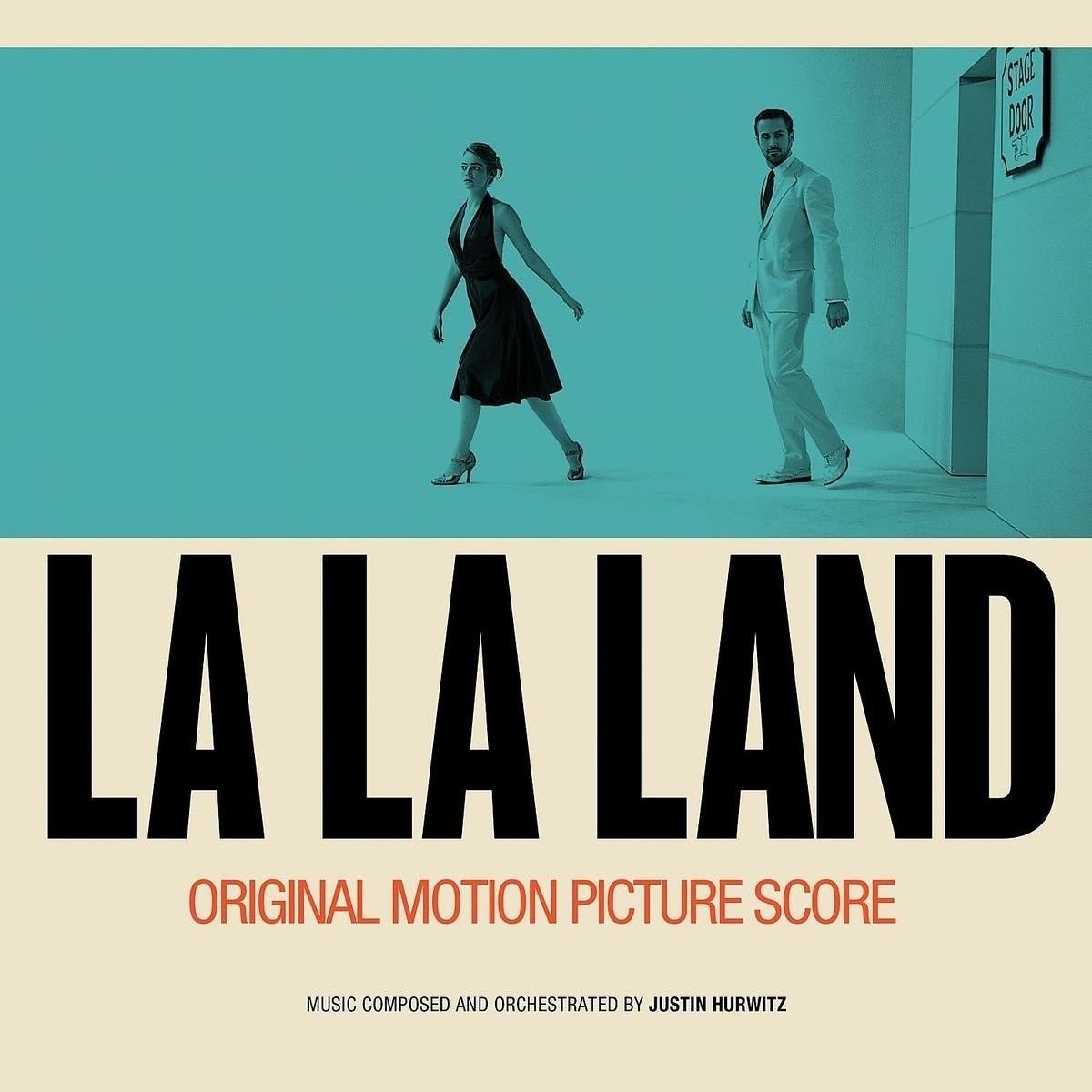
Justin Hurwitz’s La La Land won Oscars for a reason; his colourful use of jazz-infused instrumentation with sublimely memorable themes – that weave effortlessly between both song and score – altogether make for a delightfully enthusiastic and at times breathtakingly romantic soundtrack that never fails to bring a smile, and remains an incredible creation to this day.
I’ve never been the world’s biggest fan of musicals, but every once in a while one comes around that I just can’t help but fall in love with. Wicked parts one and two fell into that category, as did The Greatest Showman, and of course – hence this review – La La Land. This jazz-infused and orchestrally just wonderful 2016 musical is one I’ve kept coming back to for years now, and for good reason. Composer Justin Hurwitz – also responsible for another pretty standout soundtrack, First Man – well and truly deserved the Oscars he won for Best Original Score and Song for La La Land, as he created a delightfully upbeat and instrumentally absolutely gorgeous romantic sound and style for the film, with jazzy brass and boppy beats abound, and his resulting score and songs integrate so seamlessly because of it while also being positively awash with memorable motifs. And speaking of, let’s now get into the album. I’m primarily a film score guy, I admit, but I will touch on the songs here too as they form much of the emotional and indeed thematic backbone of the score. As such, we’ll start with “Another Day Of Sun”; some absolutely tremendous piano work features here, with the crystal clear and smile-inducing vocals of the La La Land cast backed by increasingly sprightly jazz trumpets and energetic percussion. The triumphant crescendo of the final minute, just before the film’s title practically explodes onto the screen, is of particular highlight as the instrumentation and vocals all build to absolutely spellbinding frenzy, making overall a pretty perfect opener for an album that’s only just begun to show its cards.
The short “Mia Gets Home” – the first score cue – swells with quiet string and percussive melancholy, with “Bathroom Mirror/You’re Coming Right?” then kicking up an enjoyably light pace as playful drums, piano and strings serve as an upbeat introduction to the song “Someone In The Crowd”. Similar in stylistic and enthusiastic flair to “Another Day Of Sun”, the boppy piano and percussion combination leaps and dances alongside the cast’s happy vocals for the first minute before some utterly stellar brass then practically soars into centre stage for another impeccable crescendo. The score then simmers with quiet thoughtfulness in “Classic Rope-a-Dope” as noir-like brass, floating woodwinds and plinking percussion introduce a new motif, one that will go to form the emotional core of later song “Audition”, performed by Emma Stone’s character Mia. Speaking of themes, another then debuts with the standout “Mia & Sebastian’s Theme”; the love theme. A beautifully serene seven-note piece, it echoes with an absolutely sublime romance on wistful piano through its two minute introduction here before crescendoing with dramatic flair at the end, and is one of the highlights of the score as a result. Some delightfully jazzy serenity then plays for “Stroll Up That Hill”, introducing the subsequent, trumpet-heavy and rather boppily romantic “A Lovely Night” sung by Stone’s Mia as well as Ryan Gosling’s character Sebastian.
“There The Whole Time/Twirl” continues playing with the “A Lovely Night” melody for forty five colourful seconds, before the longer “Bogart & Bergman” then returns to the “Audition” material with classically wistful woodwinds and echoing percussion. Another new motif is then introduced with “Mia Hates Jazz”, this time a rather thoughtful, strings-focused piece for Sebastian (and one that will go on to form the core of song “City Of Stars” later on, performed by Gosling). “Herman’s Habit” then surges into jazz territory proper as enthusiastic piano notes, light percussion and cheerful bursts of brass dance happily across stage for two exquisitely orchestrated minutes. “Rialto At Ten” afterward then continues in much a similar upbeat vein, though this time with the “A Lovely Night” melody as the focus of the brass. As promised, “City Of Stars” then gives us a full look at Sebastian’s thematic material as Gosling sings – and whistles – a rather downtrodden ballad atop sombre piano notes. After “A Lovely Night” then re-injects some whimsy back into the score with the lighter – though short – “Rialto”, the gorgeous love theme swings back into centre stage for “Mia & Sebastian’s Theme (Late For The Date)”, with its waltz-like performance on strings in the back half being of utterly sublime note. The four minute “Planetarium” is then the icing on the cake for the sweeping theme, with it performing first on rather classical-sounding strings before unleashing with a full and dizzyingly romantic statement on waltzing orchestra.
The childlike orchestral wonder of “Holy Hell” is an absolute delight to listen to, though it doesn’t last for long as “Summer Montage/Madeline” then interjects with tremendously blasting brass, rolling drums and rollicking piano. The similarly optimistic “It Pays” then reprises the ever-energetic “Another Day Of Sun” motif for two highly enjoyable minutes with trumpets absolutely soaring, and “Chicken On A Stick” afterward also tinkers with the same melody on twinklingly hopeful percussion. “City Of Stars/May Finally Come True” is then a longer take on the earlier and rather solemn titular song, with Gosling’s downtrodden vocals reprising alongside Stone’s too this time, before the score then returns with the similarly pensive “Chinatown” as twinkling percussion plays alongside tranquil strings. Things then get a bit more upbeat again in “Surprise” as sprightly piano notes dance opposite surging trumpets and light drums. The melody from “City Of Stars” then reprises in the much more enthusiastic and instrumental “Boise”, with energetic brass and piano injecting a head-bopping jazz element into the usually downtrodden song. It’s not long though before the orchestral solemnity does return, with the quietly introspective “Engagement Party” playing a sorrowful, piano-focused rendition of the melody from “Someone In The Crowd”. Mia’s theme then finally receives full song treatment in the heartfelt “Audition”, with Emma Stone impressively solo performing vocals alongside wistful piano.
With the album nearing its conclusion, gentle piano reprises the motif from “A Lovely Night” through the minute-long “You Love Jazz Now”, before full-on frenetic jazz then wonderfully takes the stage again with soaring trumpets and boppy percussion abound in “Cincinnati”. The standout and seven minute “Epilogue” is then an absolutely spellbinding experience all the way through, being essentially a suite of Hurwitz’s themes from both the score and songs. It begins with a solemn piano reprisal of the love theme before seguing into a wondrously waltz-y rendition, and then leaping just as effortlessly into both “Another Day Of Sun” and “Someone In The Crowd” on enthusiastic orchestra. From here the music then slows with a sublimely romantic playthrough of “A Lovely Night” and the love theme swirling above a wonderful strings and choir combination. A serene piano rendition of “City Of Stars” then continues after the former theme crescendos out, with one last and tear-jerkingly wistful appearance from the love theme then fading the tremendous track to a regretful close. The theme then continues on serene strings and vocals into the short but conclusive “The End”, before another standout moment arrives with “Credits” as the backing instrumentation from “Another Day Of Sun” returns to deliver an absolutely phenomenal four minute reprise with enthusiastic jazz happily abound.
Overall, Justin Hurwitz’s La La Land stands out as an absolutely sublime musical, simply soaring throughout its runtime in both song and score. It’s best heard through The Complete Musical Experience (which combines the soundtrack and score releases in film order), and experience is certainly the word as Hurwitz just dazzles with themes and style from beginning to end, with his jazz-infused instrumentation leaping and dancing through extraordinary cues like “Herman’s Habit” and “Cincinnati” (the sheer spellbinding energy of the trumpets particularly is a highlight) as well as, of course ,all across the two hour album. Thematically, the score revolves primarily around a love theme for Mia and Sebastian, which (unsurprisingly) acts as its emotional core and really is its heart too, heard best through Standout Cue “Mia & Sebastian’s Theme” as well as the tremendous seven minute setpiece “Epilogue”. It’s not alone though as Hurwitz also, through the soundtrack’s various sublimely-crafted songs, introduces separate themes for Mia and Sebastian individually with the former centred around the melancholic “Audition” and the latter through the wistful “City Of Stars”. These and a number of other standout songs – “Another Day Of Sun” and “A Lovely Night” being the better of the bunch there – also recur motivically across the soundtrack, weaving through emotional highs and lows across a foray of meticulous styles (the earlier mentioned jazzy instrumentation as well as the waltz-like vocal and string wonder of cues like “Planetarium” are simply *chef’s kiss*).
All-in, there’s just so much to love with Hurwitz’s sweepingly romantic and enthusiastically upbeat score for La La Land. Simply hit play on “Epilogue” and enjoy.
Score: 8.5/10
Standout Cues: Mia & Sebastian’s Theme, Epilogue, Credits
Buy Justin Hurwitz’s La La Land: The Complete Musical Experience on the Amazon UK or US store!
(note these are sponsored links!)

Follow me on Twitter for the latest soundtrack and review-based news!

Leave a Reply