
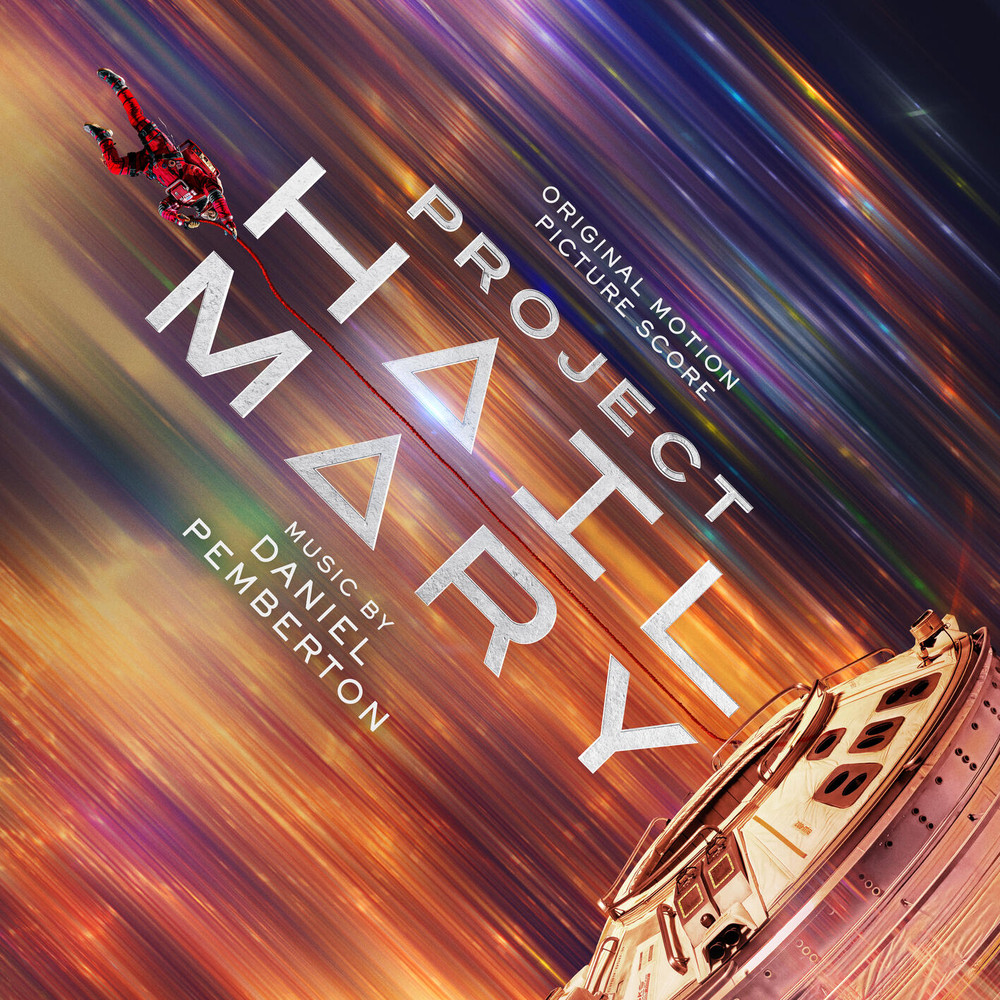
The wackiness of Daniel Pemberton’s Project Hail Mary is matched only by its pure wonder, with both evoked by some delightful instrumental combinations – hello, ondes martenot! – and a compelling ‘race to save humanity’ narrative that overall results in an utterly stellar score.
‘Wackily wonderful’ are certainly the words I would use to describe Daniel Pemberton’s score for 2026 science fiction movie Project Hail Mary, and that’s only scratching the surface. It’s funny – I actually read the book that the film is based on (written by Andy Weir) a few months ago, and instinctively I suppose given that the movie was already well on its way by then, as I read I thought about how the music might sound. Daniel Pemberton had been announced as composer too by that point, and there were certain moments – certain wonderful, epic moments – in the book’s story where I thought ‘this is where Pemberton will probably come in with a wacky, Interstellar-y kind of vibe’ (and I use the word wacky in a loving way, as the composer has a penchant for using weird and indeed delightful instrumental combinations and styles, which makes him one of the most unique and interesting composers working today honestly). That sense of pure hope and wonder though that the story and its main characters, astronaut Ryland Grace and lovable alien Rocky, evoke as they race to save their respective species’ from Astrophage-induced extinction, was something that above all else I imagined – and hoped – that the composer would be able to capture in his score for the film. And now, having finally heard it – I feel over the moon to say that’s exactly what Pemberton has done, and to absolutely spellbinding effect.
The thirty eight track, two-hour album for Project Hail Mary begins with “Ryland Grace, Cognition Assessment”, and a pure sense of stylish wonder immediately opens the track. An echoing, twinklingly percussive instrument – I think perhaps the glass harmonica – floats serenely into centre stage in the first few seconds, with an absolutely gorgeous-sounding ethereal choir then singing a four-note new theme. This doesn’t last for long though before fading out, with a much more otherworldly, outer space-y kind of feeling arriving in the next minute on what sounds like the ondes martenot – famous for its use in Elmer Bernstein’s Ghostbusters – with a gentle sense of peace and tranquility debuting another, more playful motif, perhaps for Ryland Grace himself. This enjoyably weird space-y vibe continues for the next few minutes, with a high-pitch maintained throughout until a deeper and more worrisome tone starts to seep in, evoking the tense instrumentation of the back half of Hans Zimmer’s Interstellar before the choir then returns alongside anxious strings to surge the stylistic ensemble to a dramatic crescendo finish. All-in, it’s an absolutely intriguing opener by Pemberton; the music captures that floating, unending sense of outer space impeccably well, and the themes are delightful too. The mysterious possibly ondes martenot then continues into “Last Man On Ship”, with that serene and otherworldly tone continually evoked throughout the two and a half minute cue together with ghostly vocals.
Thudding slaps of percussion open “Invalid Operation”, with a wary mood quickly established alongside eerie echoes of the ondes martenot. The church-like choir also returns before long, floating serenely above the instrumentation until the music fades to an apprehensive close. Light percussion then occupies the minute-long “Water Based” before “Humanity” brings a more solemn, almost sorrowful feel to the forefront, with downtrodden vocals hinting back toward the four-note motif of the opening track – which given its frequency across the album we’ll now call the main theme for ease. The music then becomes more determined in the percussion-focused “Box In A Box”, though wary interspersions of the outer space-y instrumentation, vocals and Interstellar-style wonder ( think it’s actually a cristal baschet in this case) from earlier still keep things mysterious. “Top Secret Clearance” then briefly brings the tone back down to Earth as the main theme plays rather tensely on percussion and apprehensive vocals, before some extremely melancholic strings and choir then perhaps expectedly occupy the four minute “You Were Loved (Burial)”. The more wondrous side of the score then returns for the lovely “Petrova Line”, with serene strings and vocals in centre stage, before “Erratic Maneuver Detected” brings dramatic tension back into centre stage as loud thuds of percussion dart alongside emphatic vocal chants.
The now increasingly in-your-face vocal chanting builds to an intense crescendo in the first half of “Canister Catch”, before the music turns almost playful in the second as upbeat percussion overtakes. The main theme then leaps and plays rather happily through “Centrifuge” alongside cheerful vocals, with the tone turning rather upbeat in the subsequent “The Message” as ethereal choir and some wacky, rather alien-sounding percussion – presumably for dear old Rocky – introduce themselves. The vocals then turn wary and almost shrill in “Entering The Tunnel” together with rumbling drums and eerie percussion, though this begins to settle somewhat in “Barrier Language” and “Anybody Home?” afterward as tonal worry turns to wonder again with ethereal vocals floating peacefully above quiet strings. The four-note main theme then echoes solemnly through the more space-y “Connection”, with the more playful percussive sound for Rocky returning together with light electronics in “Clock Numbers” and “Learning To Communicate”. This optimistic style also continues into “Rocky Moves In”, cementing a more lighthearted mood – though the space-y instruments also continue to echo in the background, keeping the wackiness firmly and entertainingly in centre stage. A solemn choir then repeats a six-note and rather solemn phrase through “God Willing”, before it then utterly explodes with soaring majesty in “A Moment” with a glorious blast of vocals, brass and strings.
Determined plinks of the main theme open “Life Is Reason”, with chanting vocals and increasingly wondrous instrumentation then building it to a tremendous action crescendo over five minutes – hinting dramatically towards a larger setpiece to come. The ethereal choir of the album’s opening track then returns for the serene “Grace Go Home”, with a particularly heartfelt rendition of the main theme soaring wondrously, before the earlier-mentioned setpiece and Standout Cue of the score arrives in the seven minute “Time Go Fishing”; thudding percussive hits opens the track, with a repeating and increasingly determined beat kicking off a dramatic pace. As the instrumentation continues to build, male chanting then starts to sound the opening notes of the main theme alongside swirls of hopeful strings. After a few moments of tense percussive action, said theme then practically explodes in orchestral grandeur for its proudest and indeed loudest rendition on the album, soaring in triumphant grandiosity all the way to the magnificent cue’s end. Aggressive electronics and orchestra however then thunder danger into centre stage with the frenetic “Excessive Centrifugal Force”, spinning with ever-increasingly ferocity until finally crescendoing out, with “Rocky Sacrifice” afterward conveying the unfortunate consequences with the six-note “God Willing” motif from earlier returning as sorrowful vocals echo.
With the score nearing its end, “Gravitational Aftermath” continues the solemn tone with downtrodden strings and vocals at the forefront, though thankfully this doesn’t last for long as the Interstellar-esque wonder returns in “Tau Amoeba” with twinkling percussion and a delightfully grandiose rendition of the main theme on triumphant strings, brass and choir, with the six-note “God Willing” motif returning too. The playful percussion for Rocky then happily re-appears in “Amaze Amaze Amaze (Fist My Bump)” together with hopeful string renditions of the main theme at first before enthusiastic vocals build everything up to a phenomenal crescendo. Teary eyes are then all abound in “Goodbye My Friend”, with solemn strings and vocals reaching a powerful culmination with the six-note motif again in tow, though despite the conclusive feel the story is not quite over yet as a worrying sense of unease seeps back into the music with the unsettling “Xenonite Contamination”. The standout “Believe In The Hail Mary” then soars with impeccable orchestral wonder – think Pemberton’s “Start A Band” from Across The Spider-Verse but space-y – with Grace’s theme from the very first track returning, before final cue “Amaze Amaze Amaze (Life On Erid)” reprises the main theme one last time with Rocky’s upbeat percussion dancing happily alongside, closing the album on an enjoyably and aptly peaceful note.
Overall, Daniel Pemberton’s score for Project Hail Mary is an absolute delight. Equal parts wacky and outer space-y as it is heartfelt and breathtakingly wondrous, the music just utterly soars – and it’s all down to the composer’s meticulous use of instrumentation and themes. The former, as per usual with Pemberton really, really stands out – weird and wonderful instruments like the ondes martenot, a glass harmonica and a cristal baschet of all things are a big focus here, as is an absolutely gorgeous-sounding choir, which altogether give the score a big, unique, adventurous and aptly alien-sounding style. The themes are also of course a highlight, with the four note main theme (heard first on those lovely vocals through opening track “Ryland Grace, Cognition Assessment”) being a simple yet spellbindingly effective piece that effortlessly leaps from floating serenity (“Tau Amoeba”) all the way up to grand determination when called for, with the resulting action music of the latter in particular being (both literally and figuratively) out of this world – I’m still star struck by “Time Go Fishing”. We also get an enjoyably otherworldly percussive sound for Rocky that adds a really fun aspect to the score, and the way that it playfully interacts with the main theme always brings a smile.
In summary then, while I would say the two hour album can feel a little long at times, Project Hail Mary is pretty great. As a massive fan of the Andy Weir book too, this score fits the wacky space adventure tone of it like a glove – and no doubt it does the film as well, which I can’t wait to see!
Score: 8/10
Standout Cues: Time Go Fishing, Believe In The Hail Mary
Buy Daniel Pemberton’s Project Hail Mary soundtrack on the Amazon UK or US store!
(note these are sponsored links!)

Follow me on Twitter for the latest soundtrack and review-based news!



Leave a Reply