
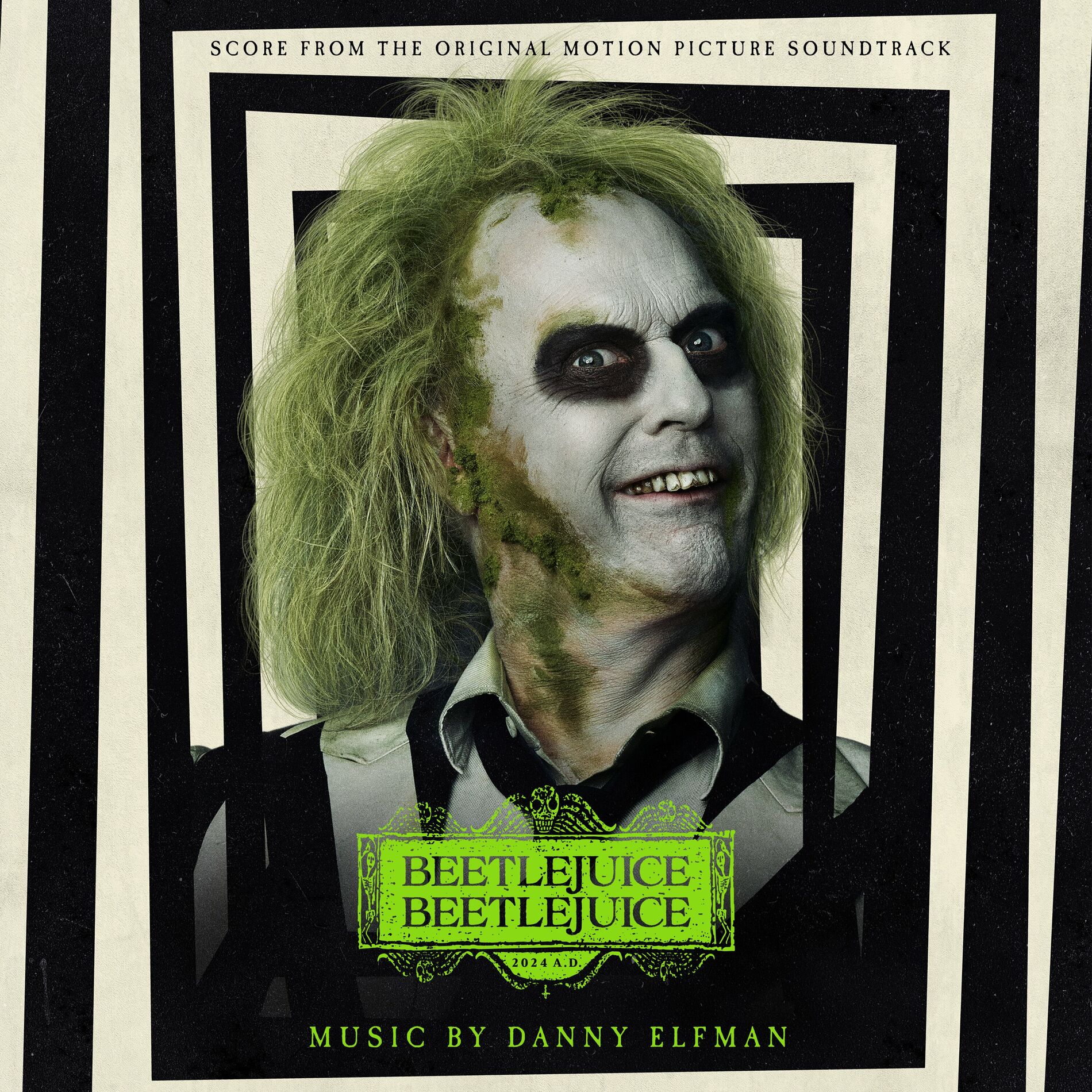
Danny Elfman’s Beetlejuice Beetlejuice is shorter than you’d like it to be with a lot of minute-long cues, but that doesn’t stop the iconic main theme from making a triumphant return on that classic gothically Elfman sound, with motifs old and new dancing darkly around it for an overall pretty entertaining sequel soundtrack.
For a while there it looked like we weren’t going to get a score album for Danny Elfman’s Beetlejuice Beetlejuice. The film’s release came and went on the 6th of September (for the UK anyway), and while we did get a soundtrack release featuring songs from the film and Elfman’s “Main Title Theme” and “End Titles” pieces, an actual score release was nowhere to be seen. Now though, almost two months later, the score has been just kind of dropped out of nowhere, but I’m not going to question it – I’m just happy we finally have it. I’ve always been a fan of Elfman’s wackily chaotic music for Michael Keaton’s iconic titular character, and so it to hear it finally return since the original film – now with a modern orchestral touch – is truly a treat to behold. So without further ado, the score begins with “Main Title Theme”; eerie, low-pitched electronics open the piece before the iconic Elfman vocals start to chant, and the recognisably Beetlejuice repeating brass and frantic string notes then burst emphatically into fray. All-in it’s basically a souped-up, modernised and much orchestrally heavier playthrough of the original film’s main title cue, and honestly? I think I prefer this one overall. The original just sounds lacking now in comparison, and I love all the modern electronic and orchestral wackiness that this brand new title piece has. The entire sequel score is worth it just for this track honestly, so Standout Cue it absolutely is.
With the impeccable main title piece fading quietly away, a sudden burst of loud brass opens “Ghost Host” with gentler strings overtaking in the back half to continue musically re-establishing the score back into the wacky world of Beetlejuice. Things then turn rather tense and worrisome with chanting vocals in “Plane Crash”, before another loud burst of brass crashes open “Boo” with ominous electronics and eerie vocals dialing up the horror in the back half. “Going To Beetlejuice” then dives deep into proper Elfman territory, with flurries of strings and organ notes reprising interspersals of the main Beetlejuice themes – both the main title piece and the tango-esque sub-theme he has in the first film. Quiet, sorrowful strings then open “Ghost That Matters” before dramatic villainy takes over in the back half with thunderously imposing brass in centre stage. Now you may think so far that I’m blitzing through all these cues a bit, but there’s a reason for that – irritatingly, for the most part this album is just composed of short sub-minute or two minute cues, which of course also aren’t great for the whole thematic and stylistic development thing. Now there is a reason for this, it’s because in-film the music is annoyingly mostly songs for this sequel, leaving little room for score to the point where I figured initially we weren’t getting a score release simply because there wasn’t enough of it to fill an album. But here we are, and that’s why we’re zooming a bit. So far, there’s just not a lot to unpack.
Thankfully, one of the longer and indeed more standout pieces is up next in “Ex-Wife’s Back”, a two and a half minute setpiece that focuses on the main villain of the film; Betelgeuse’s evil ex-wife Delores, played by Monica Bellucci. She has a theme of sorts here, represented in loudly malevolent string bursts descending in pitch, militaristically progressing percussive rhythms and aggressive vocal chanting that’s recognisable more in style than notation. It’s an exciting and very gothically Elfman setpiece overall, and would probably be the standout cue if not for the main title piece. The fifty second “Gallery Performance” is then little more than dark choral atmospheric mood setting, with Betelgeuse’s tango motif then reprising briefly at the start of “Obituary” before the Delores motif makes an aggressive cameo appearance. Three minute “The Attic” then focuses on Lydia’s piano and vocal-based material from the first film to pretty spellbinding effect overall, before the main Beetlejuice theme bursts into thunderous though brief flame through “In The Model”. Frenetic string action is then centre stage in “Ghost Story”, with gregorian chanting intriguingly overtaking in the similarly minute-long “Snake Ceremony”. The main theme also reprises loudly and boldly at the start of “Beetlejuice Returns”, with strings and brass then returning to orchestral ambience for much of the track’s two minute runtime.
The mood turns tense and almost militaristic with action percussion playing centrally in “You Agreed To Swap Lives” with hints toward the main theme playing alongside frantic strings, bursts of dramatic brass and gothic choral chanting also hinting toward Delores motif. The franticness then continues but dialed up tenfold in the minute-long “Saturn” until an emphatically deafening crescendo is reached, with the initially much quieter “Out Of Luck” following on gentle strings until thunderous vocals and brass then similarly crescendo out the track. “Delia Calls Beetlejuice” then briefly hints towards the main theme in its opening seconds before the malevolent chanting vocals and rising brass of Delores motif aggressively overtakes for the remainder of the cue. Orchestral tension and frequent, brief interspersals of the main theme occupy much of “Selfies Gone Wrong” until a sudden playthrough of “Here Comes The Bride” closes things out. “Delores Interrupts” then thunders the character’s dramatic theme into centre stage for its loudest and boldest rendition yet, until “Beetlejuice Balloons” reprises the main theme rather victoriously on its iconic frenetic bursts of brass and organ notes. Solemn strings then occupy “Delia Departs” with aggressive brassy action overtaking one last time in “What’s That”. To close the score, the happily lengthy “End Titles” then reprises the main themes with the Elfman-esque chorals and orchestra dialed up to a thunderously enjoyable eleven, perfectly ending the story… for now, anyway.
Overall, Danny Elfman’s short but still solid score for Beetlejuice Beetlejuice is just that really – the iconic main theme for Michael Keaton’s titular Bio-Exorcist returns in full and happily thunderous orchestral force, with the new main title rendition actually beating the original for me in its more modernised and triumphant stylistic approach. Other motifs from the original film such as Betelgeuse’s tango motif and Lydia’s theme also reprise, with Elfman’s classic choral, strings and brass approach bringing it all darkly and gothically together impeccably. To add to the musical world a new theme is also introduced in Delores’ malevolently deafening motif, which goes against the main one several times for some frenetically enjoyable action pieces. That being said though, honestly all of the above could do with a bit… more really. Most of this album consists of annoyingly short one or two minute cues which leaves little room in the thematic or stylistic development department. It’s unfortunately due to the extensive song use in the film – so there’s not a lot of room for the score beyond atmospheric mood setting – which is a shame, as Elfman’s obviously talented enough to carry more weight musically, so you are left wondering what the score could have been if it’d had more runtime. But at least we do get some interesting bits here, with the triumphant “Main Title Theme”, tensely villainous “Ex-Wife’s Back” and excellent finale in “End Titles” being absolute highlights.
So all-in, it’s a short and modernised but still emphatically and enjoyably Elfman return for Beetlejuice.
Score: 7/10
Standout Cue: Main Title Theme

Follow me on Twitter for the latest soundtrack and review-based news!


Leave a Reply to Marco LudemaCancel reply