
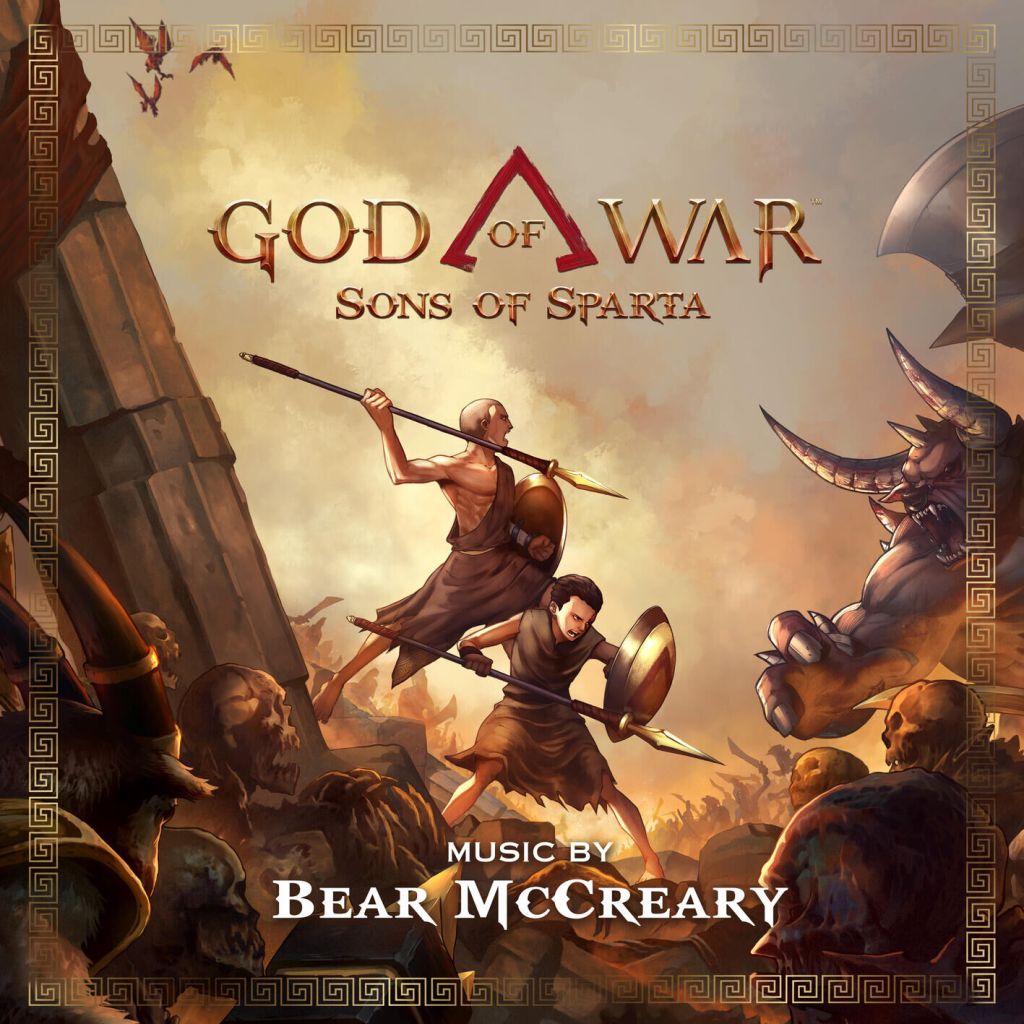
Bear McCreary absolutely rocks the house with his score for God Of War: Sons Of Sparta, as a sublime stylistic blend of classic 8-bit chiptune and superbly crafted orchestra leads a triumphantly memorable main theme across a spellbindingly Greek-styled action soundscape.
A surprise release this year – both the score and the game itself – has been God Of War: Sons Of Sparta, a 2D action/platforming game for the titular franchise that was surprise dropped during Sony’s PlayStation State Of Play presentation of February without so much as a hint of prior marketing. And more interesting still – at least for me – was the fact that Bear McCreary, who for context also composed the music for the 2018 God Of War game and its sequel Ragnarök, had scored Sons Of Sparta in its entirety, with an album release shortly following the game’s. McCreary’s aforementioned prior work for the franchise is absolutely phenomenal as well, so my interest levels quickly went from mild intrigue at the game to I have to check this out, and so here we are! And my my, was it worth it. The eighty minute album begins with “Sons Of Sparta”, the score’s main theme, and the track leaps into sprightly optimism right in its opening seconds as plinkingly upbeat percussion accompanies some chiptune-esque, very videogame-y sounding electronics playing the opening notes of the new theme. Chronologically, this game is actually a prequel, with a young Kratos as its protagonist, so it makes sense I suppose that his theme ‘isn’t fully formed yet’, hence a new theme being used over McCreary’s now well-established God Of War one. As the track continues, the plinking percussion and upbeat chiptune electronics then dramatically start to give way to triumphant brass, thudding drums and soaring orchestra.
With the stylistic ensemble rapidly rising in sheer grandiosity, woodwinds and a tremendously proud choir also join the fray with heroic brass holding the main theme high before the track then surges to a brilliantly and unapologetically loud finishing crescendo. All-in, I’m blown away. The style of this opening track alone is phenomenal; a pretty perfect blend of chiptune-esque electronics to represent the classic 2D platforming game style and a full orchestra to give the music that more modern-sounding and indeed superbly epic orchestral boost (that brass!), coupled with a genuinely memorable main theme – I was humming it even after hearing it once – overall makes this an utterly Standout Cue, to say the least. With expectations for the full album now hitting the roof, the subsequent “For The Glory Of Sparta” doesn’t disappoint as the main theme triumphantly returns in action form with frenetic strings, chanting vocals and pounding percussion leading an intensely dramatic but also exquisitely heroic charge. It’s interesting listening to the main theme thundering away on full orchestra here as well; you can hear little hints and stylistic nods toward McCreary’s God Of War theme that young Kratos will go on to inherit. After a similarly emphatic crescendo finish to that of the theme track, “Eurotas River” then returns to lighter chiptune at first for an enjoyably upbeat tone with the main theme echoing on strings and wary vocals before the ensemble then grows to a crashing finale. There’s a bit of a focus on Greek-styled instrumentation too, much like Darren Korb’s music for Hades.
A gentler, more environmental sounding setpiece then arrives with “Sparta” as tranquil woodwinds float alongside serene strings and a pensive choir before a sudden ferocious chant opens action setpiece “Mount Taygetos”, with intense chiptune-esque electronics in centre stage opposite moody low-pitched vocals until the main theme surges heroically into frame on tremendous brass at just before the midpoint, and full orchestra then builds the track to a deafeningly dramatic close. A lighter Greek-styled string and woodwind combination then occupies the five minute “Port Of Messenia” with chiptune-esque beats and emphatic chants also joining the ensemble, before “Ode To Olympus” slows the pace for a quieter, more introspective focus on ethereal vocals and serene electronics. A rather delightful ambience then settles for “Laconian Woods” as some lovely woodwind work opens the track, with light chiptune setting a relaxing tone and motif before a surge of the main theme then segues into a proudly enthusiastic orchestral approach to the same melody. “The Gallery” then opts for a gentler plucking strings style with its two minute runtime before “The Grand Cistern” and “Stone Hollows” start quietly and build to similar emphatic orchestral and electronic grandiosity to that of “Laconian Woods”. An air of whistling mystery however then overtakes for the start of “The Enchanted Isles”, before more ominously-styled Greek strings, low-pitched vocals and chiptune electronics take stylistic centre stage with the occasional wary interspersion of the main theme.
Woodwinds set a wondrous tone through “The Sanctuary” before chanting vocals, Greek-styled strings and dramatic chiptune surge to thunderous intensity in “Oenus Vineyard”. An imposing orchestral tone then occupies much of “Passage Of Monuments” as deep vocal work centrally soars, with a similarly malevolent mood continuing into the subsequent “The Sunken Agora” as the same ominous vocals echo alongside tense electronics. The main theme then plays warily on chiptune in “The Veiled Bog” opposite moody choir before Greek-styled instrumentation reprises for “The Barren Steppe” together with moody percussion and increasingly anxious hints toward the main theme. The now continuing orchestral wariness is also the tonal focus of “The Splintered Peak” as dramatic chiptune thuds against tense backing percussion and blasts of aggressive brass, until a thankfully more hopeful orchestral reprieve arrives with “The Drifting Spire” as wondrous choir and brass play centrally. Flurrying strings then clash with aggressively chanting vocals and tense chiptune in “Foundry Of Invention” before an expectedly moody ambience arrives in “The Pit Of Agonies” with wary chiptune and eerie vocal work. With the album nearing its end, tensions reach fever pitch in action cue “Always United” as anxious orchestrations surge with imposing vocal chanting to an emphatic final crescendo, before “Flute of Calliope” then slows things back down with the titular instrument playing wistfully to end the score.
Overall, Bear McCreary’s unrelentingly enthusiastic score for God Of War: Sons Of Sparta mixes a pretty perfect stylistic blend of classic videogame-y chiptune and electronics with some absolutely superb modern orchestrations, and the result is utterly phenomenal. Best heard in opening and main theme track “Sons Of Sparta” as well as through the subsequent and equally triumphant action setpiece “For The Glory of Sparta” and indeed many action cues after it, this orchestral/electronic combination absolutely rocks the house in unapologetically epic style, perfectly representing the retro 2D platformer genre of the game itself while also cementing itself firmly in memorability. Assisting this too is McCreary’s brand new and equally tremendous main theme for the game, which while stylistic hinting toward the composer’s now well-known God Of War piece at times is very much its own thing, surging heroically throughout the album – with those aforementioned tracks being utter highlights – but establishing itself as a firm earworm in that very first cue. McCreary also doesn’t shy away from embracing the Greek mythology side of the game either as some rather Hades-esque Greek instrumentation is utilised very effectively alongside gorgeous woodwinds, with ambient standouts including “Laconian Woods”, “Erotas River” and “The Enchanted Isles”, and let’s not forget the excellent vocal work either with chanting highlights “Oenus Vineyard” and “The Grand Cistern” soaring in breathtakingly emphatic glory.
All-in, there’s a lot to love here. What a welcome surprise of an absolutely superb score!
Score: 8/10
Standout Cues: Sons Of Sparta, For The Glory Of Sparta, Laconian Woods

Follow me on Twitter for the latest soundtrack and review-based news!

 Zanobard Reviews
Leave a comment