The theme for Casper practically soars for James Horner’s gorgeously serene score, with the composer’s sublime orchestrations – particularly the use of rather gothic, tragic vocals – alongside several further excellent motifs overall elevating this album to spectacular levels.
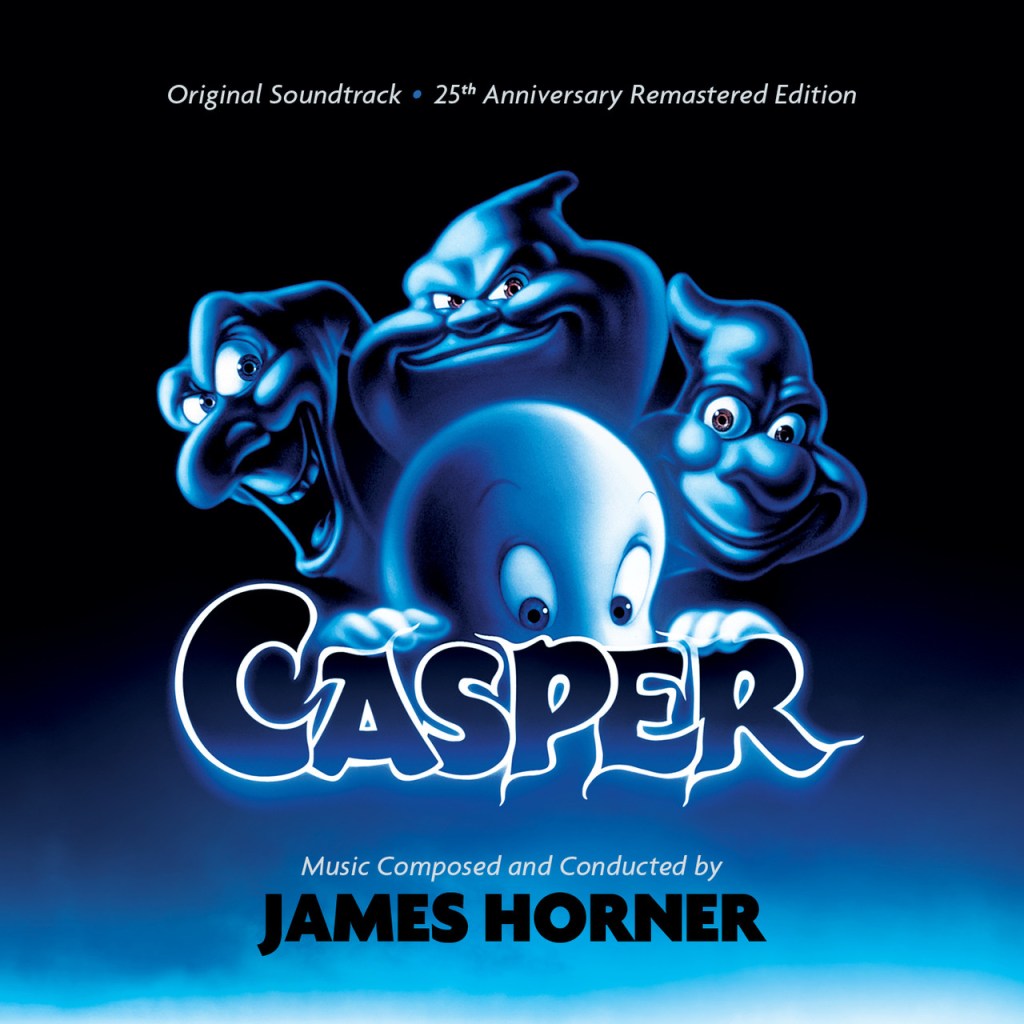
Continuing my efforts to get more James Horner soundtrack reviews on this site, up next is Casper! Much like with Windtalkers, this is once again a score with an absolutely impeccable main theme by the composer, and it’s heard at its best through theme track “Casper’s Lullaby”; gently wondrous strings open the piece, with pensive vocals – in an almost gothic, Danny Elfman-esque manner – then sounding the opening notes of Casper’s theme. It’s a wondrous but at the same time rather forlorn motif overall (parts of it also go on to form a sizeable part of Horner’s The Spiderwick Chronicles, but more on that in another review), and Horner’s orchestrations raise it to gorgeously serene levels in the first half of its five minute debut here as elegant piano notes and rising strings join the fray. With echoing tranquility abound as the strings, vocals and piano float their way ethereally along, a rather beautiful crescendo is then reached at just past the four minute mark that then fades the track to a gentle conclusion. With the main theme introduced, the score then begins proper with “Kids With A Camera”; ghostly vocals rise and fall in the opening minute, with eerie piano murmurs and percussion twinkling until a light upbeatness led by strings then surges the track to a crescendo finish.
“Carrigan & Dibs” introduces the second of Horner’s themes for the film, this time a rather typically villainous-sounding piece for the titular antagonists that swirls with greed and malice on chanting vocals, brassy surges and even a typically ghostly theremin. The subsequent “March of The Exorcists” then continues in a similar stylistic vein with the Carrigan & Dibs motif held malevolently high, with “On To Whipstaff” then introducing another new theme; a rather upbeat piece for the Harveys, the familial protagonists of the film who go on to befriend Casper. This rather pleasant new motif swirls happily on rising brass and strings throughout its debut track here, with that same upbeatness then continuing into the seven minute “No Sign Of Ghosts”. The Harveys motif re-appears rather hopefully at the two minute mark before segueing serenely into Casper’s own on thoughtful piano and strings, with the ever-dramatic Carrigan & Dibs instrumentation also reprising shortly afterward. Casper’s theme then re-takes the reins rather playfully in the back half before the last of the score’s themes is then introduced right before the end of the track; a playful, jazzy and rather mischievous piece for Casper’s dead uncles; the ‘Ghostly Trio’.
The Ghostly Trio motif goes on to form a significant part of fantastic action setpiece “First Haunting/The Swordfight”, with a sudden terrifying crash of an organ and frantic strings kicking things off before the jazzy theme starts to overtake at the minute mark. A rapid pace then thunders into centre stage with malicious brass and chanting vocals leading the Trio motif until a sudden grandly heroic fanfare fights it off at three minutes in, and this newly tremendous orchestration then engages in musical battle with the Trio all the way to the end of the track. The score then quietens somewhat for the more playful “Casper Makes Breakfast” with jazzy interludes and light orchestra entertaining flurries of Casper’s theme. The mischievous Trio theme then returns for the brief “Kat Walks To School” alongside the gentle Harveys motif, before the more wondrous side of Casper’s theme swells on ethereal piano and strings for “Fatso As Amelia”. It doesn’t take long for the fourth of Horner’s themes to also then make a return as the villainous Carrigan & Dibs motif returns alongside impish interspersions of the Ghostly Trio for “The Doctor Is In”. Twinkling wonder though settles for “The Lightouse – Casper & Kat” afterward, with a rather pensive playthrough of Casper’s theme gently soaring on strings, brass, vocals and piano – all-in cementing just how gorgeous a main theme it is.
Cheerfully swirling strings open “Costume For Kat”, with the upbeat Harveys motif then delicately intertwining with Casper’s theme until the mood darkens somewhat for the subsequent “Kat In The Attic/Fond Memories”; ghostly vocals echo and twinkling percussion dances for this much more serene setpiece, with Casper’s theme receiving a powerfully pensive and downtrodden rendition. Ten minute setpiece “Descent To Lazarus” then opens gently with hopeful woodwinds and strings before transitioning into a quiet piano rendition of Casper’s theme. From there a warm strings-based serenity envelops the music until brassy bursts and playful percussion shift it into light action territory, with a thunderous crescendo finally closing out the lengthy cue. “Dying To Be A Ghost” then continues where it leaves off with a similarly frenetic pace and the addition of more ‘ghostly’ instrumentation including percussion and an organ, with frequent interspersions of Casper’s theme also abound. “Carrigan Crosses Over” then reprises the titular malevolent motif alongside tremendous brassy and vocal crescendos, with some rather sublime jazz overtaking at the start of the subsequent “Dad Returns” alongside chanting vocals before the music segues into a few beautifully serene renditions of Casper’s theme.
For the finale of the album, a sudden sense of sheer orchestral wonder and beauty radiates in “Casper Gets His Wish”, with instrumentation and vocals contributing equally to a truly sublime and happily lengthy rendition of the title theme. “One Last Wish” then crescendos quickly with brass and twinkling percussion before moving into a quieter string and piano-focused playthrough of Casper’s theme. Final track “The Uncles Swing/End Credits” is then up there for the Standout Cue award alongside “Casper’s Lullaby”, being an enjoyably long reprisal of each of the score’s major themes; it opens with a burst of sublimely frenetic jazz with brass and drums abound hinting toward the Ghostly Trio motif, before then rapidly moving into a rather joyous rendition of the theme for the Harveys on upbeat orchestra. A slightly moodier, more mischievous appearance from the Carrigan & Dibs motif is then up next before the music slows at the three minute mark and gothic vocals reprise for a lovely strings and piano playthrough of Casper’s theme – bringing both the track and indeed the album to a wonderful finish a short while later.
Overall James Horner’s score for Casper is absolutely breathtaking, both in its use of sublimely memorable themes and its frankly gorgeous orchestrations (now remastered and expanded courtesy of La-La Land Records!). The big standout is of course Casper’s wondrous yet also rather tragic theme, heard at its best through Standout Cues “Casper’s Lullaby” and “The Uncles Swing/End Credits”, and the aforementioned orchestral style assists its memorability and genuine beauty quite sizeably in featuring both lovely string and piano work as well as some rather Danny Elfman-esque gothic vocals. The motif for the Harveys is also really nice, an upbeat and hopeful piece that goes through several exquisite renditions in the aforementioned end credits cue and “On To Whipstaff”, and while they’re not quite as interesting as the above two, the themes for the Ghostly Trio (“No Time For Ghosts”) and Carrigan & Dibs are fun as well – the former in particular gets some enjoyable jazzy workthroughs in “First Haunting/The Swordfight” alongside some superbly heroic brass work. The light tone and style of much of the music here too makes it very fun to listen to, and also hammers home the emotional moments that much more heavily when they appear – see “Casper Gets His Wish”. All-in then there’s a lot to love with Horner’s Casper score, and certainly the main theme and end credits are on my list of the composer’s absolute highlights.
Score: 8/10
Standout Cues: Casper’s Lullaby, The Uncles Swing/End Credits
Buy the 2-CD expansion for James Horner’s Casper here, published by La-La Land Records.

Follow me on Twitter for the latest soundtrack and review-based news!

 Zanobard Reviews
Leave a comment