
The strength of James Horner’s score for Windtalkers lies in its noble main theme, which charges through heroic highs (“A Sacrifice Never Forgotten”) and solemn lows (“The Night Before”) all across a militaristic, war-torn orchestral soundscape here, and while it’s not one of the composer’s most talked about albums, that doesn’t stop it from being utterly spellbinding.
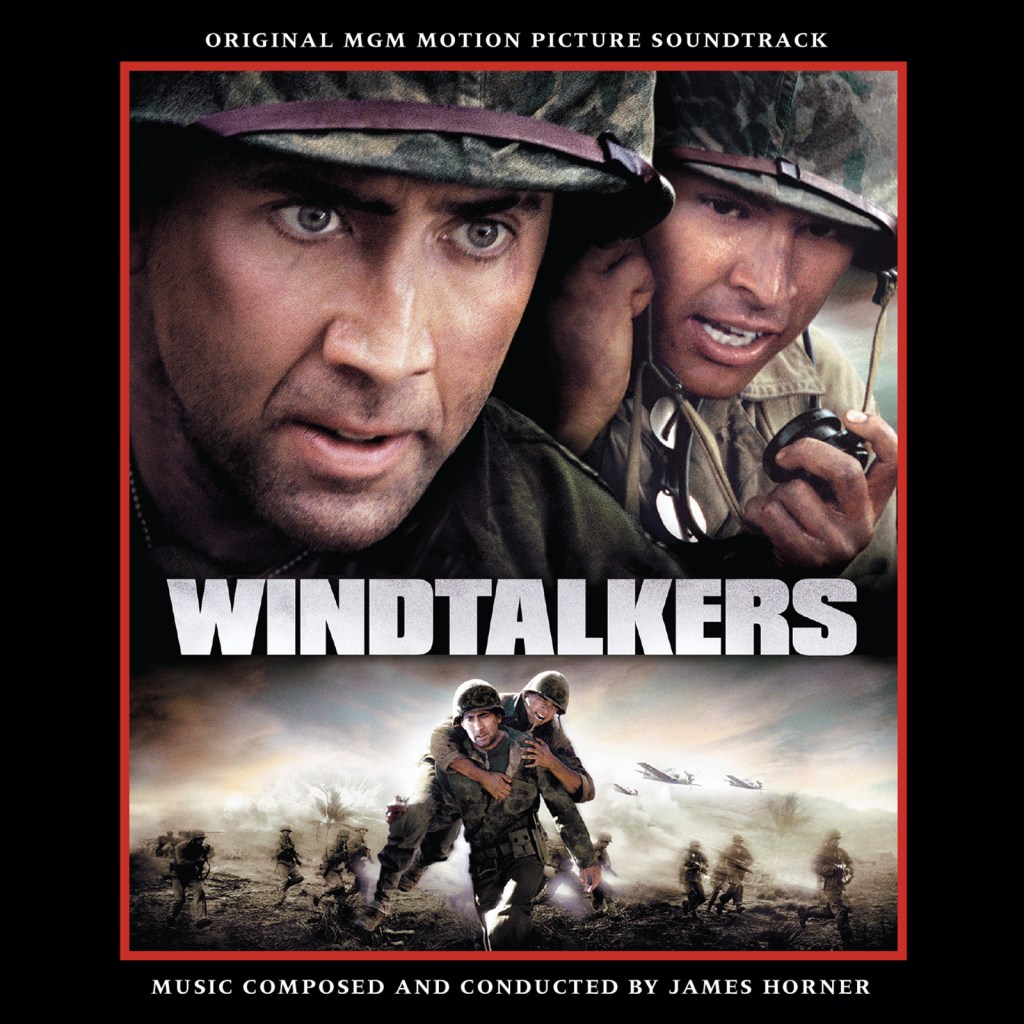
I’ve neglected my all-time favourite composer on this review site of late, I feel. James Horner for various reasons – primarily his impeccable use of melodies and wonderful action music – has always been my favourite, and as such I’ve always meant to build a review catalogue of sorts of his soundtracks on this site. That hasn’t happened much lately, mostly due to lack of time, but now I’m rectifying that – I aim to try review a few expansions of Horner works every year from now on. And so first up is Intrada’s excellent expansion for 2002 war film soundtrack Windtalkers; not a hugely popular Horner score by any means, but I’ve had a bit of a soft spot for the main theme of late (again, see above for that love of the composer’s melodies) and you can hear it pretty much right off the bat on this expanded album, in first track “Najavo Dawn (Revised)”. Echoingly eerie chanting vocals open the piece, before gently melancholic strings sound through followed by noble hints of brass. Horner takes his time here, letting a quietly thoughtful ambience settle over the music – and you can hear a bit of The Perfect Storm in it too – before the main theme is then introduced at the two minute mark on ethereal woodwinds and strings. It’s a rising, hopeful and pretty rapidly memorable motif overall, and the way it swells with gentle grandeur and brassy nobility through its introductory track here sets a tone for how genuinely intriguing this score will be.
An intense burst of the infamous danger motif opens “Solomons”, with thunderously militaristic percussion, imposing brassy bursts and rapid strings setting a feverish pace. A high-pitched spread of worrisome strings then briefly cuts off the action at the two minute mark before the noble main theme strides dramatically into the fray on brass, and the orchestra then fades to a warm close. “A New Assignment” parts one and two then continue this hopeful mood, with the first part simmering quietly with gentle strings before part two builds to a grandly triumphant playthrough of the main theme on full orchestra. “An Act Of Heroism #1” then sets a rather eerie tone in its opening minute with ghostly-sounding synth playing alongside wary strings, before the rather Perfect Storm-esque gentler strings then reprise in the back half alongside a wondrous woodwind variation of the main theme. Crashingly frantic action then kicks off with “Saipan: Crazy Joe” as emphatic brass and percussive clashes thunder to crescendo, with the subsequent minute-long “Saipan: Bazooka Ox” continuing in a similarly tense vein before action setpieces “Taking The Beachhead/Saipan First Radio Call” versions one and two take centre stage; the former brings a sense of dramatic determination with hints toward the main theme, that then practically explode with a fully heroic, brass-heavy action rendition that’s simply, utterly glorious.
The latter cue continues in the same militaristically heroic vein with another thunderous playthrough of the main theme with the full orchestra held enthusiastically high, and man – it’s music like this that makes me miss James Horner so, so much. Utter action powerhouse tracks were – in my opinion anyway – his compositional strength, particularly in showcasing his genuinely amazing orchestral talents, and these two tracks are excellent examples of that skillset in action (literally). “The Night Before” then slows the score down to a quietly reflective pace, with high-pitched strings playing rather morosely opposite moody brass and a few almost sorrowful renditions of the main theme. A rising sense of string-based worry then occupies much of “Wounded Man”, before action leaps into centre stage once again for “Marine Assault” parts one and two; murky brass and serene strings open the first part with tense drums starting to flare before a surgingly powerful rendition of the main theme closes the track, altogether acting as a wary prelude to the much lengthier second cue. This ten minute setpiece opens with a frantic rumble of percussion that sends the the main theme charging heroically forth on brass, before orchestral tensions then overtake for a few further minutes.
A few rather anxious renditions of the main theme leap in and out of the action for the next few minutes, with hope starting to build until a sudden crash of percussion and horror-like strings shatters the rise at around the halfway point. Slowly though orchestral hope pushes through again, resulting in another grandly determined charge from the main theme – that sounds utterly breathtaking, I might add – before the music then fades to a solemn finish with high-pitched strings and noble brass. The score then turns dark, cold and almost horror-like for the first half of “Ghost Ceremony”, with metallic clangs, unnerving strings and eerie synth abound, before quieting down for the much more sorrowful back half interspersed with mournful appearances from the main theme on echoing woodwinds. The more militaristic side to the score then returns for the percussive “Entering Village”, with “Village Attack” a short while later reprising the danger motif as wary brass and strings start to kick up a worrisome pace. “An Act Of Heroism #2” then opens just as tensely before a soaringly heroic rendition of the main theme crescendos the short cue to finish, though this is sadly short lived as the Perfect Storm-esque solemnity returns at the start of “Losses Mounting”, with some rather devastating brass and anxious strings kicking off action in the back half.
The ever-foreboding danger motif seeds tension in “Drive To Minefield”, with “Ambush” straight after continuing this orchestral anxiety with brassy punches and ever-frantic drums. The eight minute “Friends In War/Death Of Hjelmstad” then opens warily before action once again kicks off at the minute mark, with frequent anxious interspersions of the main theme and danger motif darting in and out alongside the increasingly frantic orchestra. With the album overall now nearing its end, the one-two Standout punch of action finale “A Sacrifice Never Forgotten” and end credits piece “Calling To The Wind” arrive; the former is an eight minute and rapidly-paced setpiece that starts with the ever nail bitingly tense militaristic drums, frenetic strings and brassy bursts before then practically soaring with breathtakingly heroic renditions of the main theme. It’s such a satisfying action cue as a result, and I may or may not have been grinning from ear-to-ear as the main theme leapt through its heroic charge – it’s that epic, and the orchestral complexity from Horner here is just sublime too. The end credits track then of course brings the score full circle, doing the Horner classic of playing a gently hopeful and indeed enjoyably lengthy rendition of the main theme to fade Windtalkers to a thoughtful and reflective finish.
Overall, James Horner’s war-torn score for Windtalkers is one of his lesser-discussed works, but that doesn’t stop it from being a highly enjoyable album experience from start to finish. Its biggest strength is naturally its main theme, which proves its memorability right off the bat in opening cue “Najavo Dawn” as well as its versality across the score through quietly thoughtful lows (“The Night Before”, “Calling To The Wind”) and triumphantly heroic highs (“Taking The Beachhead”, “Marine Assault”), with the absolute Standout star of the show being action finale “A Sacrifice Never Forgotten” where the theme gets its grandest, most spellbinding playthrough of the album. Stylistically too Horner has this one nailed, with militaristic percussion and aggressive brass giving the action a fittingly thunderous anxiety to reflect the film’s World War II setting, and the quieter and more introspective moments like “Ghost Ceremony” pretty perfectly and indeed solemnly showcase the true horrors of war too. All-in, Windtalkers isn’t the composer’s best score ever, but I for one absolutely adore its versatile main theme and dramatic orchestral grandeur, and Intrada’s happily lengthy 3-CD treatment gives us plenty of both to enjoy.
Score: 8/10
Standout Cues: A Sacrifice Never Forgotten/Calling To The Wind
Buy the 3-CD expansion for James Horner’s Windtalkers here, published by Intrada.

Follow me on Twitter for the latest soundtrack and review-based news!

 Zanobard Reviews
Leave a comment