
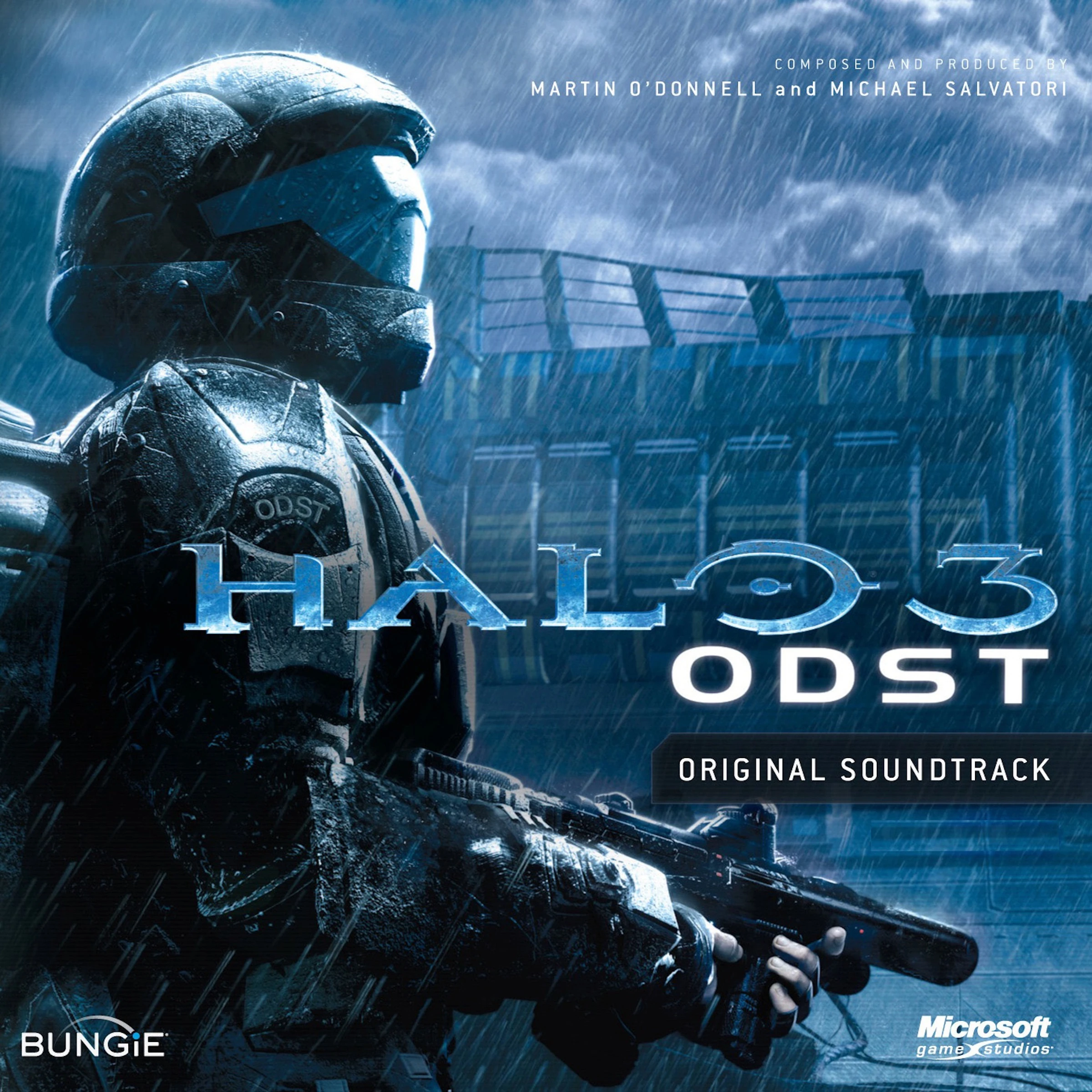
The entrancing ambience of Martin O’Donnell and Michael Salvatori’s intriguingly saxophone-focused score for Halo 3: ODST is its strength, with its jazz-blues orchestral style and some ferociously exciting action setpieces making it a highly entertaining Halo soundtrack overall.
Gentle plinks of rain amidst distant rumbles of thunder open “Overture”, the first track of Martin O’Donnell and Michael Salvatori’s score for Halo 3: ODST, followed by a quietly wistful jazz-blues-styled echo of a saxophone. Thusly, even in just the first thirty seconds of this decidedly different Halo soundtrack, a tone has already been set – and it’s one of gentle orchestral melancholy. Intriguingly, dark moody ambience is very much the focal point of O’Donnell and Salvatori’s work for ODST, with the aforementioned downtrodden jazzy brass as the instrumental focal point. With said instrumental introduction fading, gentle strings then overtake in the continuing “Overture” to emphasize the rather forlorn atmosphere, with eerie electronics also entering the fray at just past the two minute mark. Flurrying strings and wary piano notes then suddenly yet briefly kick up at the halfway mark, with solemn drums emphasizing this darker tone alongside further strings that then build to a dramatic finishing crescendo. All-in, it’s a curiously ambient start for a Halo album; the iconic theme is intriguingly absent, but in its place is this absolutely gorgeous jazzy atmosphere and instrumentation that works impeccably well at setting the scene for the rainy, war-torn streets of New Mombasa (the game’s setting). So overall; an excellent start.
Downtrodden piano notes and serene strings introduce “The Rookie”, with the worrisome flurries of strings from “Overture” then returning alongside moodily low-pitched brass and Terminator-esque aggressive synth thundering to crescendo. A three note solemn repetition (from the jazz blues-styled brass of “Overture”) then echoes eerily against high-pitched strings before percussive atmosphere fades the seven minute setpiece to a close. Our first full taste of action then arrives with “More Than His Share”, as intense drums thud angrily against wary electronics and sorrowful vocals for the first three minutes before reaching a loudly imposing finishing flourish. Plinking piano notes then ethereally open “Deference For Darkness” with the three-note blues motif reprising as serenely as ever. Tranquil ambience settles for the next few minutes with quiet strings in tow until some rather espionage-y percussion seeps into centre stage, setting a moodily unsettled tone for much of the rest of the track. The faster paced “The Menagerie” then brings us back to action territory, with rumbles of imposing drums hinting back to the tense style of “More Than His Share” for a primarily percussive setpiece overall. Gently wistful ambience then returns for “Asphalt And Ablution” as peaceful piano notes, electronics and distant percussive echoes play for the first few minutes before the saxophone returns for further blues-esque ambience.
Ominous swathes of low-pitched strings open “Traffic Jam” with wary synth also joining the fray alongside solemnly militaristic brass (again hinting back toward “More Than His Share”). As the cue continues, a more upbeat guitar then rips into centre stage alongside increasingly dramatic drums and string flurries for an impeccably grandiose action segment. Quietly piano-focused serenity then occupies the start of “Neon Night” with wiry electronics also contributing to this atmosphere, before wary drums begin to overtake just before the two minute mark and the track then concludes with a faster-paced focus on jazzy-blues ambience with the lovely saxophone once again reprising. A ferocious percussive intensity then kicks off “The Office Of Naval Intelligence” before being briefly interrupted by the serene strings from “The Rookie”, with aggressively metal-esque synth and drums then thundering the action to its conclusion. A solemn piano and string motif is then the focus of the first few minutes of “Bits And Pieces” before darker drums and some rather hair-raising, ghostly ambience then follow. The saxophone however returns as ethereally as ever for the final two minutes, echoing atmospherically alongside gentle piano and percussive plinks.
Deeply pitched and rather unsettling ambience opens “Skyline”, evoked by echoing electronics and weary strings until louder, more in-your-face percussion then overtakes. This rising action then builds in both volume and intensity across much of the track’s seven minute runtime with an electric guitar also rocking emphatically until the music fades to a close. Anxious piano notes then flare alongside gentler strings for “No Stone Unturned”, harkening back to the starting “Overture” in style before moodier electronic ambience and tense percussion then overtakes for the remainder of the track. After a minute or so of gentle atmospheric introduction for “One Way Ride”, wary percussion starts to pick up the pace with high-pitched strings and before long eerily disconcerting electronics also join the fray, altogether contributing to a rather cold, ominously atmospheric setpiece overall. The plinking piano from “Deference For Darkness” then opens “The Light At The End”, once again setting an atmosphere of relaxing tranquility; you can practically hear the rainfall of the dark streets of New Mombasa as it plays. This lasts for the first three minutes of the track before low-pitched electronics then start to drag the tone down into darker, moodier territory, with a light percussive reprieve only briefly occurring before imposing ambience returns to occupy the remainder of the seven minute setpiece.
With the end of the album approaching, “Data Hive” echoes in melancholy for its opening minutes with deeply low-pitched, Terminator-esque synth and unnervingly cold electronics setting an eerie tone, and creepy bits of plinking percussion then emphasize this darkly ominous atmosphere until gentle strings briefly harken back to the serenity of “Overture”. The warier side of the cue however continues into the subsequent “Special Delivery” before an electric guitar then ups both the pace and the action ante for a few fist-pumping minutes. Solemn brass then echoes notes from “The Rookie” alongside an increasingly frantic percussive build-up, and this together with a few infrequent saxophone interspersions builds action up once again to a thunderous finishing crescendo. A standout moment then arrives with the flourishing “Finale” as everything comes together for a tremendous action setpiece; the three-note motif from “Overture” returns on brass alongside increasingly triumphant strings and percussion, all building to an impeccable crescendo with an upbeat saxophone reprisal sandwiched inbetween. With the action fading, a gentle string and piano hint toward the original Halo themes then enjoyably arrives followed by ethereal vocals, before the track – and the score – conclude with one last blast of heroic action.
Overall, Martin O’Donnell and Michael Salvatori’s saxophone-focused, rainily ambient score for Halo 3: ODST is very different in both style and tone to other soundtrack entries in the Halo franchise, and that’s what makes it so utterly entrancing. The aforementioned saxophone is king of the instrumentation used here, echoing in quietly wistful jazz-blues style against the gentle plinks of rainfall and distant rumbles of thunder in the opening “Overture” and indeed all across the album, overall providing this decidedly unique blues-fueled ambience (“Neon Night”, “Deference For Darkness”) which absolutely makes the game as you carefully walk the ruined, dirt-ridden streets of New Mombasa, eyes peeled for any enemy movement in the damp darkness. And the impeccably crafted atmosphere isn’t all this score has to offer either, as when the moment arises the composers don’t shy away from the emphatic orchestral thunder that Halo is known and loved for, with tracks like “Traffic Jam” and “Finale” providing thunderous action punches in unapologetically epic brass, percussion and electric guitar form. Thematically, ODST is less obvious than other entries – using the iconic Halo themes very sparingly – but the three-note jazzily ambient main theme (“The Rookie”) works well with the orchestral style, which in of itself is so uniquely immersive that full themes aren’t really missed all that much anyway.
All-in, Halo 3: ODST is one of my favourite Halo games both in gameplay and score, and I can’t deny – that jazz-blues saxophone and its entrancing atmosphere is a huge part of why.
Score: 8/10
Standout Cues: Overture, Neon Night, Deference For Darkness, Finale

Follow me on Twitter for the latest soundtrack and review-based news!


Leave a Reply