
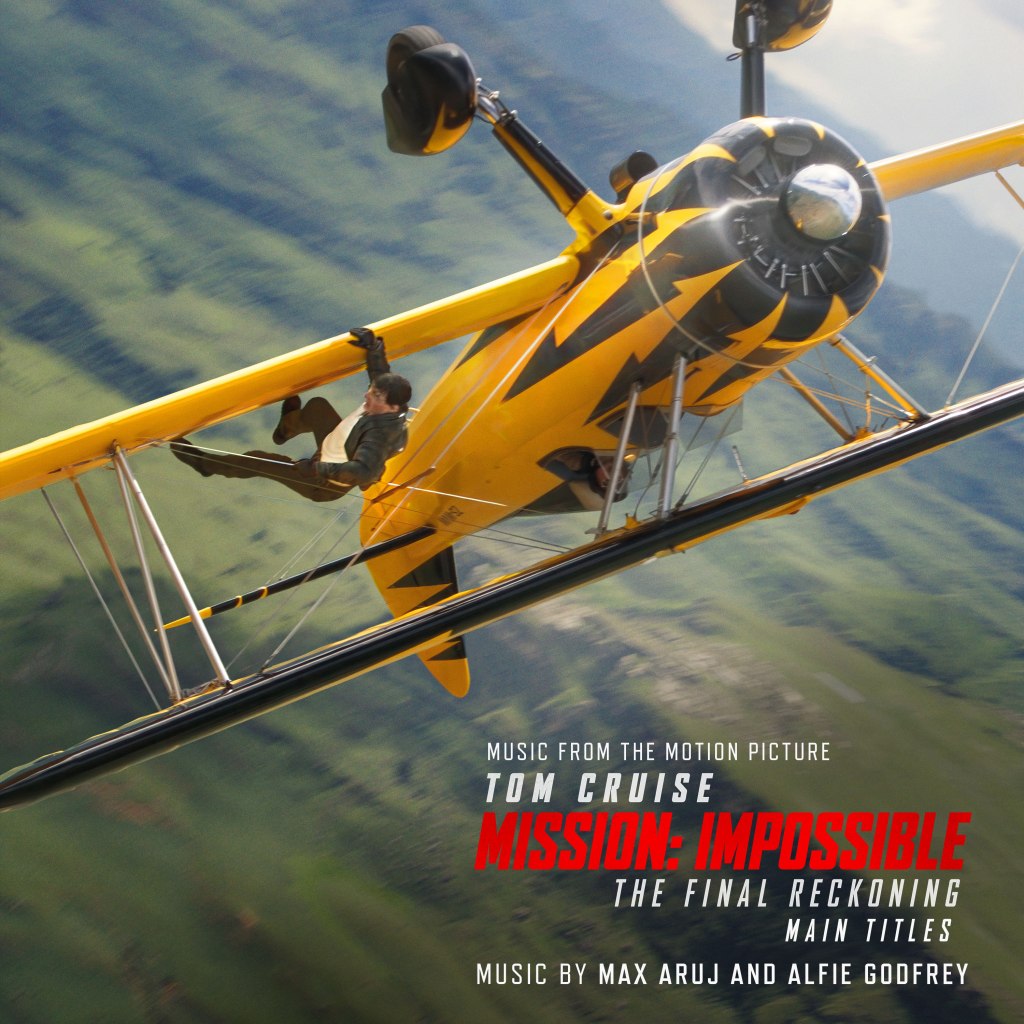
Max Aruj and Alfie Godfrey’s score for Mission: Impossible – The Final Reckoning devotedly continues Lorne Balfe’s frantically energetic, bongo-driven stylistic legacy for the franchise, and while this does result in some fairly… safe M: I music at points, the higher emotional stakes this time around also make for some truly standout setpieces that overall make this album well worth a listen.
It was a bit of a surprise to hear that Lorne Balfe would not be returning to score latest Mission: Impossible film entry The Final Reckoning, given that he’d worked on the last couple of films alongside director Christopher McQuarrie. That said, the music for this latest film looked to be in similarly bombastic hands as Max Aruj and Alfie Godfrey were announced to compose instead, the former of whom having worked on the music for prior films Fallout and Dead Reckoning Part One. And indeed, the two hour album begins with “We Live And Die In The Shadows” which immediately reprises those incredibly Lorne Balfe-esque bongo drums as the track opens, crashing into centre stage with the opening notes of Lalo Schifrin’s main Mission: Impossible theme also thunderously in tow. It doesn’t last long at forty five seconds of runtime but as opening tracks go it’s pretty effective, letting you know immediately that we’re very much still in the Balfe stylistic era of Mission: Impossible despite the composer change. Much slower, solemn strings then overtake in “Another Sunrise” with quiet brass echoing the main theme in the background before wary action storms into centre stage for “Come Home Ethan”.
“Main Titles” does the classic big re-introduction of Schifrin’s theme, with deafeningly grandiose brass and crashing bongo drums thundering it along to pretty spellbinding effect. The subsequent “Martial Law” then wastes no time in diving right back into action territory as both Schifrin’s main and “The Plot” themes make a dramatic appearance on surging brass carried by frenetic percussion. Hints toward the eerie “Entity” motif from Dead Reckoning Part One start to spark in the moody “Origins” alongside echoes of the Schifrin main theme, before sudden heroic surges of both the main and Plot themes on deafening bongos and brass burst into frame in “It’s Only Pain”. Eerie atmosphere occupies much of “The Entity” with worrisome vocal hints toward the main theme fading in and out throughout. Powerful vocals then come together with the full orchestra for the incredible “The Entity’s Future”, though it sadly ends right before it feels like it’s about to get properly going. Tense drums then pound alongside frequent short interspersions of the main theme through “I’ll Be Waiting” before things simmer back down for the mostly quieter and slower “This Is Where You Leave Me” with pensive strings at the forefront until a loud orchestral crescendo is reached towards the end.
The pace starts to quicken once again in “Mt. Weather” as the three note repeating variation of the Schifrin main theme that occupied much of the Fallout and Dead Reckoning Part One scores thunders along on brass alongside eerie echoes of the Entity motif. The main theme alongside boisterous bongos then reprises in determined brassy form through “The Eye Of The Storm” before the action then really gets going in “Firefight”; tense strings and bursts of surging brass occupy centre stage for much of this four minute anxious setpiece, with both the main and Plot themes playing in particularly worrisome form until a deafening crescendo crashes things to a close. The subsequent “The Icecap” then starts off quietly before starting to build with the three note variation of the main theme getting louder and grander until reaching practically deafeningly dramatic levels. Ghostly vocals and strings then occupy the mainly ambient “The Sevastopol” before seven minute setpiece “I Owe You My Life” opens moodily with the ominous Entity motif, with solemn introspective strings playing the main theme for much of the rest of the track. Bongos then crash back into centre stage in the first minute of “Cons” with loud brass blasting the three note variation of the main theme until this all suddenly subsides in favour of quiet, wary string ambience.
Orchestral tensions reach fever pitch in “We’ll Figure It Out” with emboldened brass and bongos galore, and fragments of the Plot theme then follow stylistically suit straight afterward in the ninety second “Liftoff” and also through “This Is Not Good”. Orchestral thunder then practically blasts the three note variation of the main theme all across “Problems” before the Plot theme returns alongside deafeningly dramatic vocals in “Ten Seconds… Maybe”. As the score starts to near its end, emphatic action gets a pounding playthrough across “Good Luck” with anxious brassy bursts leading the main theme on a tense charge before “Descending” quietens things significantly with an unusually forlorn rendition of the main theme. This in turn sets up the nine minute “A Light We Cannot See”, with solemn piano notes opening the track and downtrodden strings and brass playing the main theme in pretty much as morose a manner as possible, elevating the emotional stakes quite dramatically in doing so. “Curtain Call” then triumphantly closes the story proper with a full rendition of the main theme and a handful of bonus cues then close off the actual album, with standouts being the emphatic action piece “This Is My Mission” and the tensely emotional “For Those We Never Meet”.
Overall, Max Aruj and Alfie Godfrey’s score for Mission: Impossible – The Final Reckoning is a pretty damned emotional one, which is apt really considering this is supposed to be the final entry in the iconic franchise. Certainly penultimate cue “The Light We Cannot See” plays Lalo Schifrin’s well-known theme in as solemnly final a rendition as possible, and all throughout the album there’s an impending tonal sense of dramatic finality that’s not present in the other soundtrack entries. That’s not to say this score is incredibly dour though, because it certainly isn’t – there’s a few thunderously epic action setpieces in “Martial Law” and “This Is My Mission” for example, and Standout Cue “The Entity’s Future” is just fantastic in its pure unleashed rendition of the main theme on grandiose orchestra. This all being said though, the score here isn’t perfect – unsurprisingly, it’s very similar in style to Lorne Balfe’s work for Fallout and Dead Reckoning Part One (with bongos of course galore) which makes it feel just a bit… safe, and much like with the latter’s album in particular the music does all start to feel a little samey after a while too. I also still maintain that “Stairs & Rooftops” remains the standout action setpiece of this musical era of the franchise (Fallout, Dead Reckoning Part One and this), so no improvement on that here either.
Still, I enjoyed this score a fair bit more than Dead Reckoning, for the simple reason that the sheer emotional power of some of the tracks here (“The Entity’s Future”, “A Light We Cannot See”) makes the album well worth a listen.
Score: 7/10
Standout Cues: The Entity’s Future/A Light We Cannot See

Follow me on Twitter for the latest soundtrack and review-based news!



 Zanobard Reviews
Leave a comment