
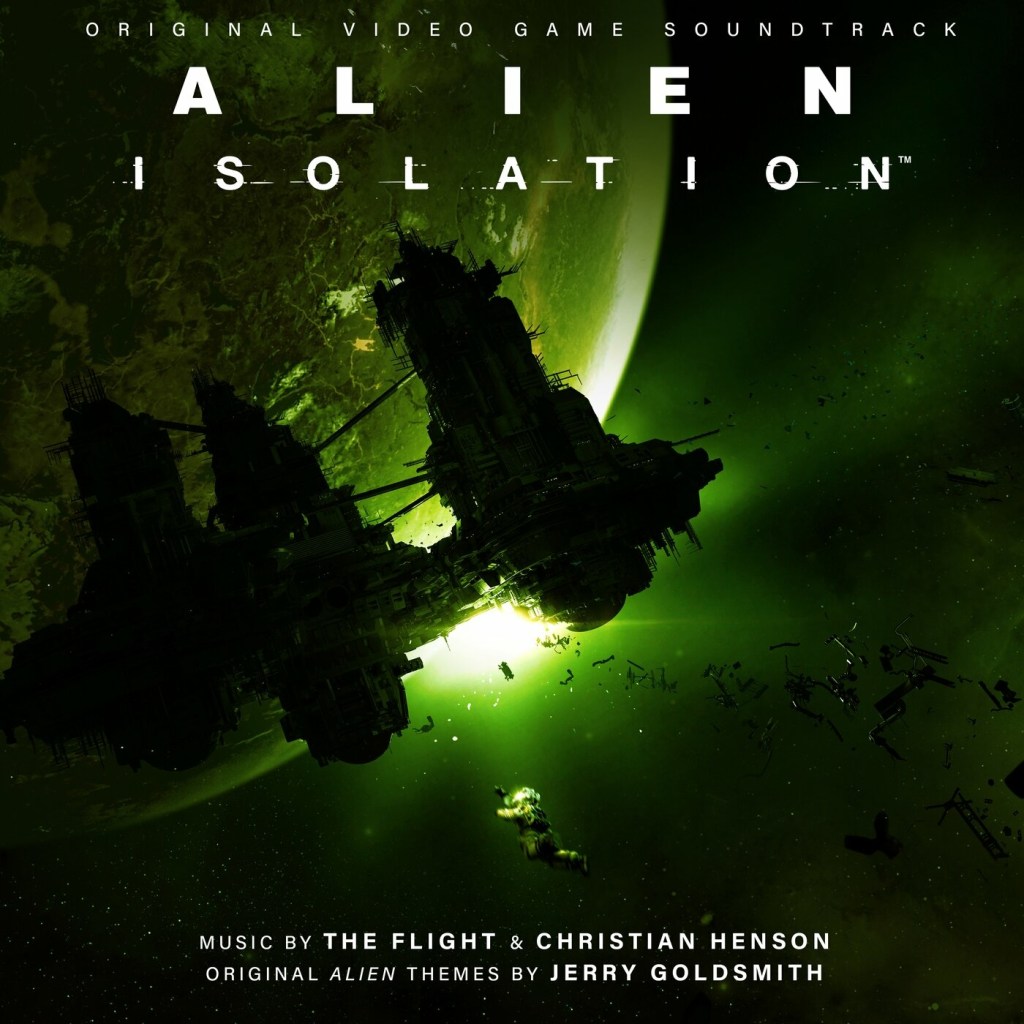
Ten years after the game released we finally have a soundtrack album for the Flight and Christian Henson’s incredible score for Alien: Isolation, and it’s just as coldly ambient, eerie and utterly, perfectly Alien as the game was. I still can’t get over the Xenomorph creeping down from the vents as the brassy “Quarantine” plays in mission five. Absolutely terrifying, but genuinely brilliant.
I never thought that I’d actually be able to write this particular soundtrack review. Alien: Isolation released ten years ago but no score album dropped with it, nor did one for many months and years after to the point where I was absolutely certain one would never see the light of day, much to my genuine sadness. But now, amazingly – here we are. Ten years later a soundtrack has finally been released for the frankly incredible game, and good thing too as the score (composed by The Flight and Christian Henson) is absolutely fantastic. Stylistically and thematically, much like with Alien: Romulus earlier this year their music too surrounds itself with Jerry Goldsmith’s iconically atmospheric work for the first film, though Isolation differs somewhat in that its main thematic inspiration comes not from the main theme of the original Alien – though that does play a small part – but from the film version of its main title piece. This differs greatly to the album-released main title, removing themes almost entirely in favour of eerily high-pitched horror-like strings and sort of wind-like atmospheric electronics, and in terms of setting the tensely terrifying scene for the impeccable film it really couldn’t have done a better job, so it’s unsurprising really that the composers for the similarly terrifying Isolation would opt for a similarly inspired approach.
Opening track “The Torrens” starts quietly, with low moody strings setting an eerie tone initially before those same unnerving high-pitched strings from the aforementioned film version main title from Alien then make their first ominous appearance. The composers then twist this approach somewhat as the track continues, adding additional notes and similarly creepy piano and woodwind instrumentation to set this score firmly linked but also apart from the original film. The high-pitched strings then start to take prominence in the back half until eerie woodwinds take centre stage to re-introduce Goldsmith’s two-note secondary main theme from the original film before the track then dies quietly back down. The subsequent “EVA” then evokes more unnerving atmosphere from Goldsmith’s Alien with the spine-tingling two-note motif reprising – I must say, the way it plays in this track particularly really does evoke the terrifying tone of the original film in the most hair-raising way possible, and I do love it for that. It sets the mood so incredibly well when you’re playing the game too, cementing it firmly as the scariest game I’ve ever played, that’s for damn sure.
Deeply unsettling atmosphere then establishes a firm grip on the score in “Welcome To Sevastapol”, with those tensely ominous woodwinds evoking Goldsmith’s main title once again alongside a background of coldly malevolent strings. “Axel’s Death” then continues in a similarly horror-like vein initially before a sudden crash of brass-based terror bursts in at the thirty second mark before vanishing as quickly as it arrived. “San Christobal” employs some rather sinister-sounding vocals to induce dread for much of its first minute, with worrisome strings then picking up a tense pace in the back half of the track. The mood then simmers in the opening seconds of “Quarantine” before a sudden rising crescendo of terrifying brass then signals the arrival of the Xenomorph – I remember exactly when this plays in the game as well, right as the Alien descends horrifyingly into the Medical Facility in mission five – with frantic electronics and strings then thundering nerve-wracking action into centre stage for the remainder of the cue. “Working Joes” then evokes the coldly uncaring nature of the titular androids impeccably, with eerie electronic ambience marching sinisterly through all across this two minute piece.
“Solomon’s Galleria” is another intensely atmospheric location-based piece, with cold electronic ambience settling over the entirety of the cue’s four minute runtime. “The Hunt” then switches things up as a dramatic action setpiece, with frenetic percussion taking the forefront alongside high-pitched and increasingly horror-like strings evoking Goldsmith’s Alien once again. The minute-long “The Derelict” then reprises the echoingly spooky strings from the similarly titled “The Skeleton” cue from Alien – as both tracks represent the horribly unnerving alien spaceship from which this entire franchise spawned – with “The Space Jockey” continuing in much a similar vein with high-pitched elements of Goldsmith’s film version main title also eerily reprising alongside ethereal vocals. Gentler, more hopeful strings then provide a brief respite from the horror in “Catherine Foster”, but this doesn’t last for long as “Tomorrow, Together” returns to the unnerving electronic ambience of earlier cues in its first half, with things turning more sinister in the back half as quietly pulsing percussion joins the fray alongside hair-raising strings.
A sudden burst of dissonant electronics signals a dramatic call to action in “It’s Here”, with said electronics frantically continuing alongside continual bursts of brass and high-pitched horror-like strings all across this hair-rising two minute cue. The eerily ethereal vocals from earlier tracks then reprise in “The Descent” together with the ominous electronic and string ambience from Goldsmith’s film version main title piece. The vocals then start to become shrill and disquieted as the track continues, with additional ones creeping dramatically in for the final minute. The dissonant electronics then take completely over in “The Core” for a tense action setpiece alongside frantically chanting vocals and imposing percussion and brass, with the building tension continuing into the first few seconds of the subsequent “The Beast” until things then suddenly quieten, and moody atmosphere overtakes for the remainder of the track. With the album approaching its end, “Escape Sevastapol” builds tension to fever pitch for another thunderous action cue with “Airlock” continuing in a similar vein, and final cue “Ripley’s Theme” then closes the score with a gentle piano focus and a final reprisal of Goldsmith’s main Alien theme to fade the album quietly out.
Overall, The Flight and Christian Henson’s gorgeously terrifying score for Alien: Isolation is just incredible, as it pretty perfectly captures the cold ambience of Sevastopol Station and is genuinely one of the best Alien scores around. ‘Gorgeously terrifying’ really is appropriate here as well, as the music utilises orchestral terror to spellbinding yet also wondrous effect – from the creepy strings of “Welcome To Sevastopol” through the lurking ominousness of “Quarantine” and past the tensely robotic “Working Joes” to name but a few excellent cues – while also reprising Jerry Goldsmith’s themes and style from Alien just enough to keep you on your toes, and it even finds its own uniqueness stylistically through eerily simmering electronics and tense atmosphere that all together really seals Isolation as an absolute horror masterclass. Having played the game, even years later I can still recall where many of the cues play – “Quarantine” still gives me shivers – and creeping around the dingy shadows of Sevastopol Station with this score lurking moodily in the background was almost as unnerving as the Alien itself, it’s just that good. To finally get an album release ten years after the game came out as well is an absolute treat, and it’s really making me want to play the game again – traumatising as it was.
And they just announced an Alien: Isolation sequel too. What a time to be an Alien fan.
Score: 8.5/10
Standout Cues: EVA/Welcome To Sevastopol/Quarantine

Follow me on Twitter for the latest soundtrack and review-based news!

 Zanobard Reviews
Leave a comment