
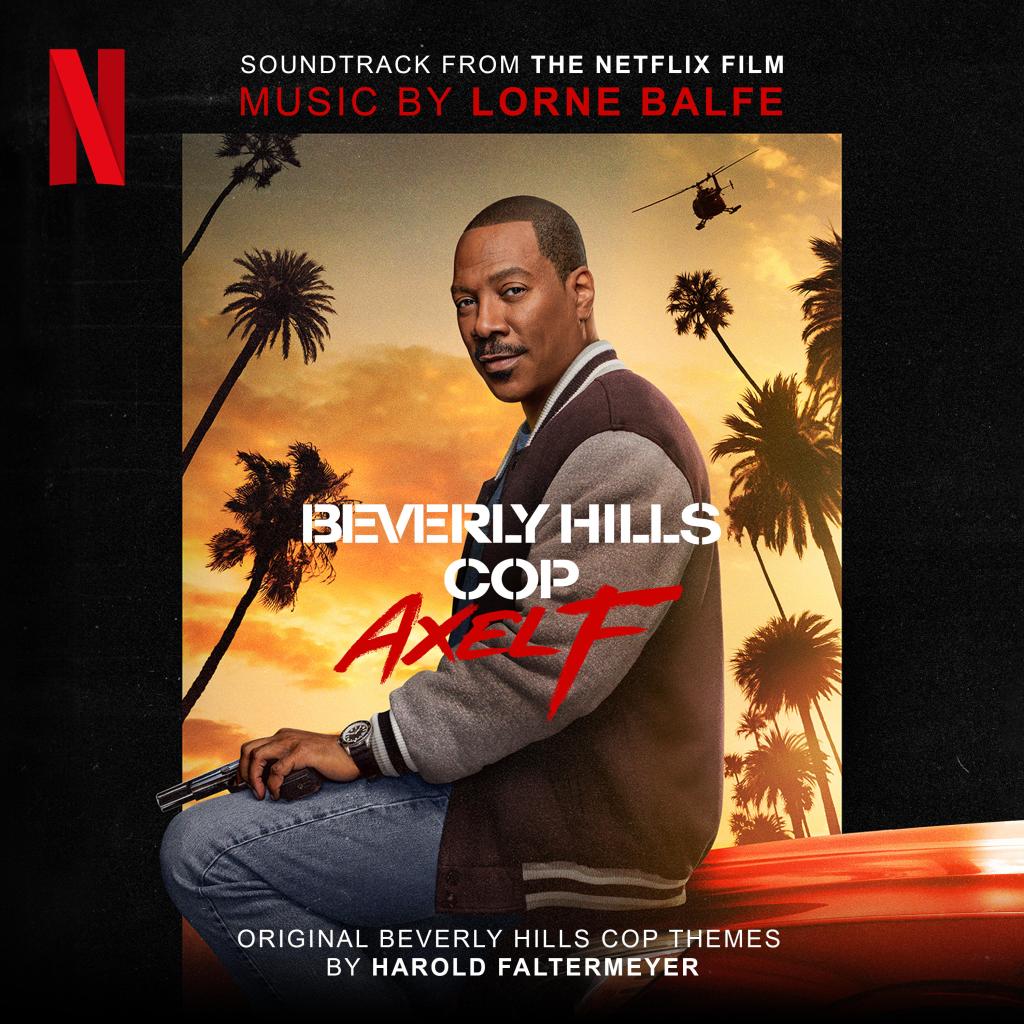
Lorne Balfe’s Beverly Hills Cop: Axel F sequel score is a fantastic modernisation of the original 1984 Faltermeyer classic, reprising the iconic theme to spellbindingly entertaining ’80s effect throughout the album here with an incredible-sounding synthwave & electronic soundscape to boot.
Ah, another modern sequel to a classic and indeed beloved 1980s film. Beverly Hills Cop. It’s always intriguing when an iconic film franchise is resurrected to be honest, particularly if it had a similarly well known score or theme, as the question then always inevitably is; does the new score reprise the themes from the original? Depending on whether its a sequel or a reboot, that answer can certainly vary, but I find even with straight sequels it can be quite hit and miss as to whether original material is reprised or not, especially if a new composer is brought into the fray with the modern revival. Thankfully though – Beverly Hills Cop: Axel F is on the side of hit. The iconic main theme from the 1984 original film – “Axel F”, composed by Harold Faltermeyer – is resurrected brilliantly here by composer Lorne Balfe, and it reprises in exquisite synth spades all across this new album.
And to hear it properly in action, we have to look no further than the opening and indeed standout track “Beverly Hills Cop: Axel F (Curnow Harding Remix)” – named for mixers Phil Harding and Ian Curnow. Immediately as the track begins ’80s synth and thunderous electronic beats flare, and the Axel F theme bursts in for a dramatically funky performance that then segues into happily lengthy as the synth (performed by the Sunglasses Kid), electronic beats and even a fantastically played saxophone (performed by Tim Cappello) elevate the iconic motif to incredible new heights for three thoroughly entertaining minutes. Serious props to Balfe here, this really is a classic theme modernisation done right; the original motif feels bold and fresh without losing any of that ’80s funk that made it so popular in the first place, and its allowed to play loudly, proudly and indeed lengthily here to spellbindingly enjoyable effect overall. A genuinely incredible album opener.
With the ’80s atmosphere firmly established, the subsequent “Snowplough Chase” opens with playful synth notes and upbeat electric beats before more mordern-sounding brass and vocals then join the fray, debuting a brand new energetic theme for Axel (which goes on to get a full introduction in “Axel’s Return” later, but more on that when we get there) with all of the aforementioned instrumentation then building dramatically to a thunderously emphatic finishing crescendo at the two minute mark. “Junior Bollinger” then fully re-embraces the ’80s synth aesthetic, with the bridge of Faltermeyer’s original “Axel F” theme briefly reprising before fast-paced, upbeat electronics then seed a particularly synthwave-y ambience with notes from the aforementioned motif interspersed before the track then fades out. “Meet Jane” switches up the atmosphere yet again, with more modern-sounding percussion and brass seeding tension through the first minute until the mood then relaxes somewhat with electronic beats and synth alongside a brief but welcome reprisal of the “Shoot Out” motif from Faltermeyer’s original 1984 score. The four minute “Trackers” then builds moody tension and ambience for much of its runtime, with only a gently wistful piano giving a brief reprieve towards the end of the cue.
“Wilshire Boulevard” continues in the same moody electronic tension style as the predecessing track for its opening minute, before dramatically upbeat drums and synth then kick up the pace for the remainder of the now anxiously ambient cue’s runtime. Faltermeyer’s “Axel F” theme then reprises in gently atmospheric form in the subsequent “Bribe Chalino”, continuing the ambience from the prior few cues with a slightly more upbeat nature to it as the aforementioned iconic motif dances lightly through. Next track “Axel’s Return” however is certainly not a background mood-setter piece. Balfe’s new theme for the titular character returns in full ’80s force here, with loudly triumphant synthesizers and dramatically upbeat electronic beats holding the new motif thunderously and utterly enthusiastically high all through this track’s fantastically four minute runtime. Tim Cappello and the Sunglasses Kid even return here too, with the respective saxophone and synthwave instrumentation rocking to incredible new heights as a result. If it weren’t for the impeccable rendition of Faltermeyer’s “Axel F” theme that opens this album, this one would’ve been standout cue. With the saxophone simmering back down though “Rooftop Escape” then delves into action territory, starting slowly and tensely with moody electronics in tow before slowly building in intensity throughout the track.
The three and a half minute “Bad Helicopter” then continues where the prior cue leaves off, with tensions rising and electronics building until Axel’s new theme soars heroically into frame on loud brass and triumphant vocals at just before the two minute mark, and the track overall then builds to a deafening finishing crescendo. “Rescue Rosewood” then descends into moody ’80s synthwave ambience for much of its runtime, with brief hints towards Faltermeyer in the back half before “Mansion Shootout” then pushes the action right back into gear. More modern-sounding percussion and brass join forces with the synth and electronics this time, adding a new layer of tension to the already worrisome action alongside Axel’s new theme until at last a dramatic crescendo brings the build-up to a close. With the album now fast approaching its end, “Team Talk” slows the pace down to a gently optimistic crawl for its opening minute with quiet vocals and solemn strings playing until Faltermeyer’s “Axel F” motif brings back the hopeful swagger in the back half with the ’80s synth and beats returning one last time. To close out the score, “90210” then reprises the aforementioned motif but now on a loudly grandiose and indeed rather epic orchestra, integrating the iconic Faltermeyer theme fully into RCP territory while also modernising it pretty damned effectively, making for a thunderously heroic finish to the album.
Overall, Lorne Balfe’s immensely ’80s-styled Beverly Hills Cop: Axel F score is a wonderful throwback to the iconic Faltermeyer age of synth. Its complete and utter lack of fear in just pure indulgence of the electronic synthwave soundscape of that era is incredible, and I found myself grinning from ear to ear on more than one occasion across this amazing album as those impeccable “Axel F” theme notes played. Speaking of which, I’m sure many will be glad to know the well-known motif appears in unapologetic spades all across this score, alongside a few sporadic appearances from other themes from the original 1984 film (such as the “Shoot Out” motif) while also joined by a thunderously swaggering new theme from Balfe for Axel, which fits in right alongside. Style-wise too, the composer as I say has been utterly unafraid to reprise the Faltermeyer-esque synth soundscape and even adds to it, bringing in synthwave composer the Sunglasses Kid, saxophonist Tim Cappello and his own electronics skillset alongside brief bursts of more recent orchestral components to bring the ’80s Beverly Hills Cop sound into the modern age, and it all sounds brilliant as a result.
It’s not often that a long-awaited sequel score lives up to expectations, but I have to say; Lorne Balfe has really done it here.
Score: 7.5/10
Standout Cues: Beverly Hills Cop: Axel F (Curnow Harding Remix)/Axel’s Return

Follow me on Twitter for the latest soundtrack and review-based news!


 Zanobard Reviews
Leave a comment