
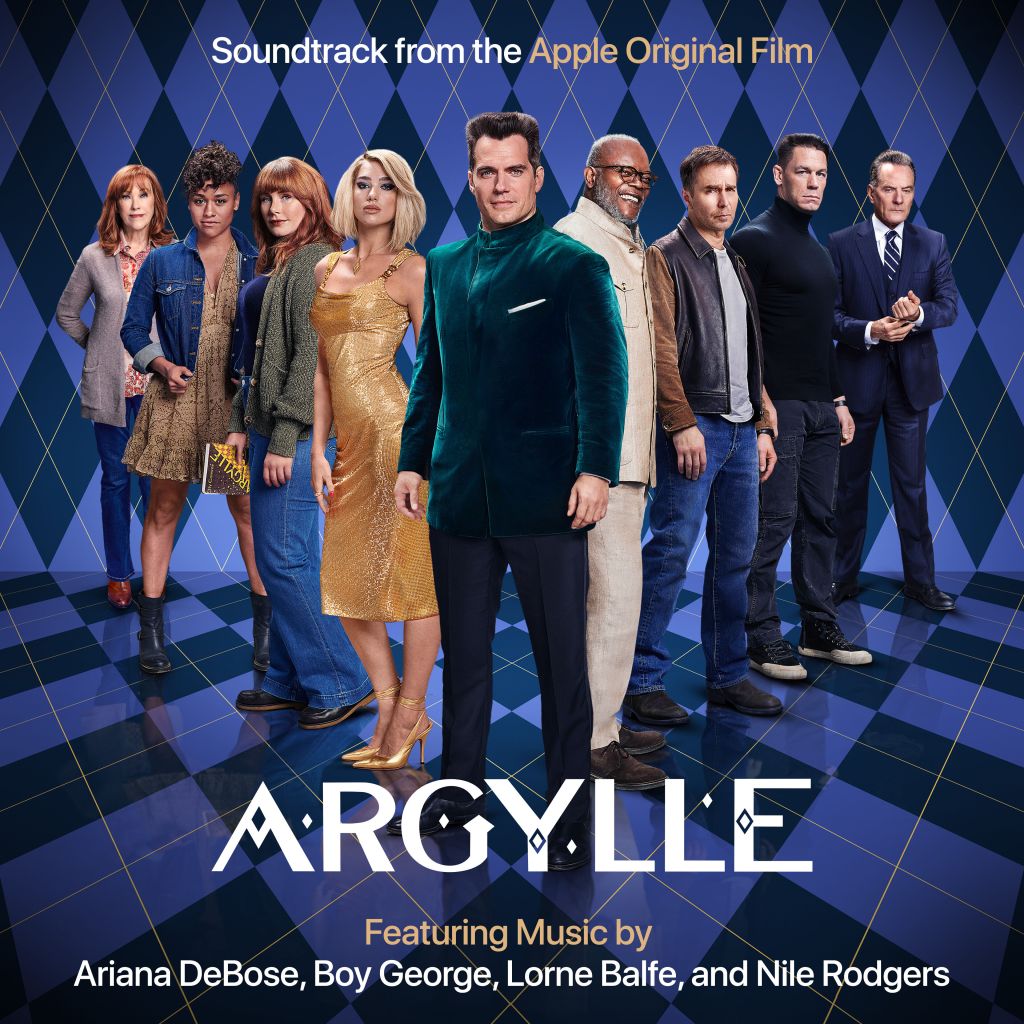
Lorne Balfe’s Argylle is an endlessly fun action score that features a genuinely stellar main theme in “Argylle’s Theme”, and the way that exquisite motif is then weaved to impeccable enjoyment through thunderous action highs and heartfelt lows makes this soundtrack well worth a listen.
Now cards on the table, I wasn’t actually going to review this particular film score. That is – until I heard the main theme anyway. Then it all changed, as if there’s one absolute fact you should know about me it’s that I’m a complete sucker for a good main theme. And Lorne Balfe’s one for Argylle – showcased throughout standout cue “Argylle’s Theme” – simply just ticks that box; the track starts quietly, with gently upbeat strings and brass introducing a rather noble tone. As the track continues a four-note ostinato is then introduced, Argylle’s ostinato, which helps to further the increasingly grand and heroic mood before the full ten note theme is then introduced at 01:05; it’s bold, it’s gallant and pretty much instantly memorable, and the way the theme then interplays with the similarly emphatic ostinato as well as with the growing volume and intensity of the orchestra – now with vocals too in tow – utterly propels this thunderous track forward through the rest of its three minute runtime until a blindingly heroic crescendo then crashes it out, and all-in – on hearing this cue for the first time my feeling was one of definite intrigue, but after repeated listens now I’m just completely enthralled by how fun it is. An absolutely stellar main theme. And my excitement for this score doesn’t stop there either.
“Elly’s Writing Theme” is the second of three primary motifs for Argylle, and it’s a much gentler piece at first that’s introduced on thoughtful piano notes and pensive vocals in its debut track here. As the music continues, the six note theme then slowly rises in both volume and intensity until a grandly hopeful crescendo is reached, and then to close out the track surprisingly a few notes from The Beatles’ “Now And Then” song enthusiastically play. Now you may think, bit random, but it actually ties in quite cleverly to the character of Elly in the film, who uses the song as inspiration for writing her ‘Argylle’ books and it then forms a sort of emotional core for the entire movie as a result, which is quite a fun idea. With the Beatles melody fading gently out, “The Division Theme” then introduces a more malevolent motif for the titular villains of the film; eerie organ notes open the piece, playing the new six note theme with low-pitched brass and tense percussion starting to build in the background, and the instrumentation then rises grandly together for the next two minutes with the villainous motif held high until crescendoing malevolently out.
The score itself begins with “Mini Moke Mayhem”, a fun action setpiece that has not only the main Argylle ostinato and theme held heroically front and centre (counterpointed with a couple of moody Division motif mentions), but also a few emphatically orchestral cameos from dance song “Do Ya Wanna Funk?” by Sylvester and Patrick Cowley, which adds an enjoyably ’80s aesthetic to the action here. The ominous “Division” organ then moodily reprises in “Serve The Same Master” followed by a quietly hopeful appearance from the Argylle ostinato, with the full theme joining it on upbeat strings in “Argylle In Hong Kong”. The orchestra then slows to a gentle crawl in “Aiden & Elly”, with the Argylle theme playing on piano notes, low brass and strings, before frenetic action then kicks off in “The Spy Who Scratched Me”; loud bursts of deafening brass accompany tense percussion here, with the main theme held thunderously high and the ever-moody Division motif making brief ominous cameos all across the three minute track. The action then turns erratic and worrisome in “Parental Misguidance” with a similarly tense appearance from the Argylle theme toward cue’s end, which then turns solemn and reflective on strings in the subsequent “Do You Think I’m OK?” and “Alfie” cues.
The Argylle theme slowly starts to regain its confidence at the start of “Rachel’s Story”, before eerie strings and electronics then build to an ominous crescendo. Frenetically heroic action then returns in “Double Crosser” with the Argylle theme in brassy centre stage doing high stakes musical battle with the ever-malevolent Division motif. Frantic tensions then reach fever pitch in the subsequent “Furocious” with the orchestra reaching almost deafeningly dramatic levels, before “Mama’s Got To Go To Work” unleashes the most thunderously heroic rendition of the main theme and ostinato yet as fist-pumping brass and enthusiastic strings work utter musical magic for seventy spectacular seconds. “Satellite Signals” then continues to build upon the tense action works of earlier, with “Concluding The Argylle Saga” then slowing down the main theme for one final hopeful playthrough. To end the album, Balfe then has one last and rather intriguing treat in store with “Now And Then (Argylle Symphony)”, which is a dramatically orchestral version of the same Beatles song I mentioned earlier intermixed wonderfully with Elly’s writing theme, and as the orchestra swells and deafening volumes are reached it certainly brings a smile, and is a pretty fantastic way to end this excellent soundtrack.
Overall Lorne Balfe’s unapologetically fun score for Argylle is just completely that, and combined with an absolutely stellar and very catchy main theme it certainly turned my head, and perhaps even yours too. Said theme and its similarly memorable ostinato appear in happily heroic form throughout the breathtakingly orchestrated and standout “Argylle’s Theme”, and other album highlights include fist-pumping action renditions in “Mini Moke Mayhem” and “Mama’s Got To Go To Work” as well as slower, gentler playthroughs that prove its tonal versatility in “Do You Think I’m OK?” And “Concluding The Argylle Saga”. Alongside the thunderous main theme is the counterpointingly malevolent Division motif as well as the gentler “Elly’s Writing Theme”, which appears on swelling orchestra in its titular track as well as in the exquisitely orchestrated “Now And Then (Argylle Symphony)” which of course also intriguingly features the Beatles song melody. All-in, there’s a lot to like with Balfe’s work here, but if there’s one word you can take away from this review about it it’s that it’s just utter fun.
Frankly too, if the opening minute of “Mama’s Got To Go To Work” doesn’t completely sell you on Argylle, nothing will. So what are you waiting for? Take a listen.
Score: 7.5/10
Standout Cue: 26. Argylle’s Theme

Follow me on Twitter for the latest soundtrack and review-based news!

 Zanobard Reviews
Leave a comment