
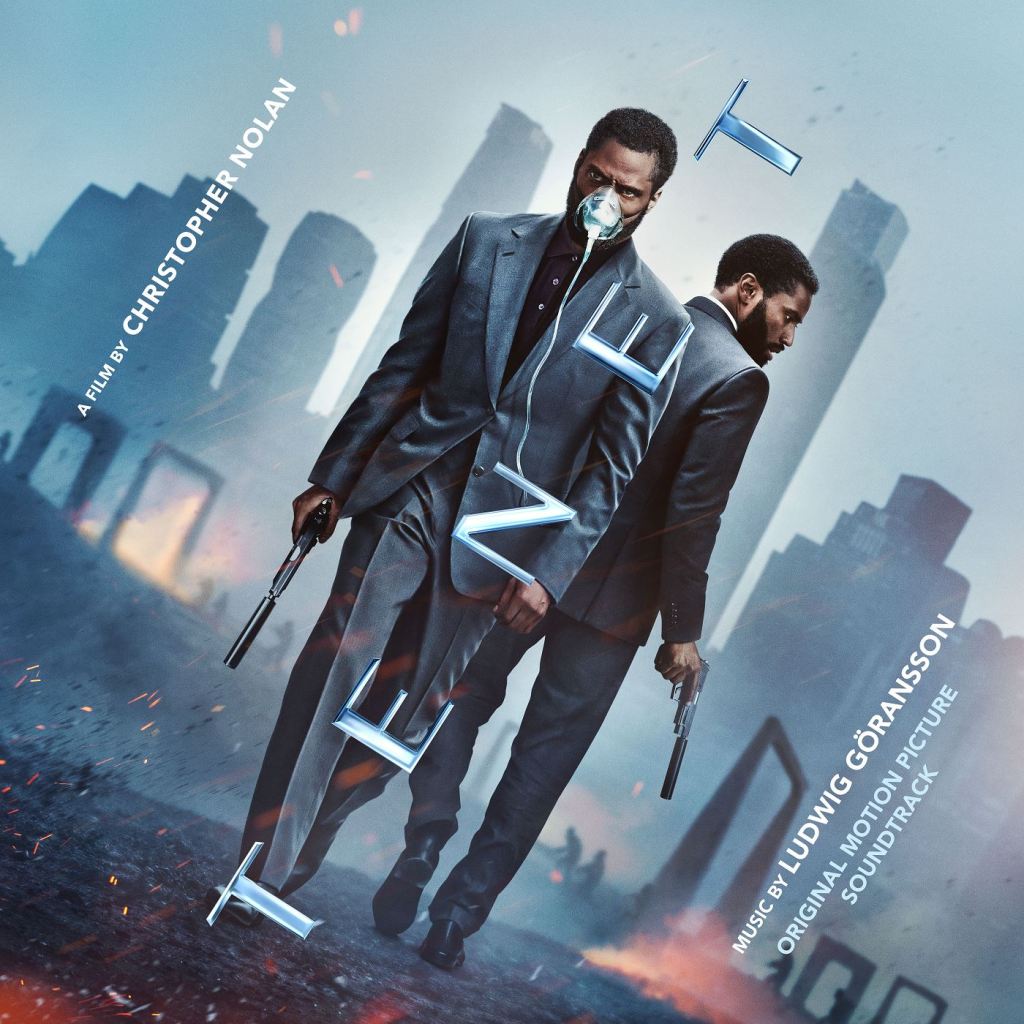
Ludwig Göransson’s TENET is the worst kind of film score – dull, lengthy atmospheric mood-setting mixed with moments of ear-piercingly harsh electronic “action” while also featuring none of the gentle themes or epic cues that usually make this kind of score worthwhile.
When it was announced that Ludwig Göransson would be taking scoring duties for Christopher Nolan’s latest blockbuster I admit I was skeptical. Hans Zimmer and Nolan have pretty much gone hand-in-scoring-hand in recent years, and I worried that Göransson wouldn’t be able to bring the same musical gravitas to the table that Zimmer does (interestingly he apparently passed up TENET for Dune, so we’ll see how well that works out at the end of the year). The question of the hour though is this; did Göransson manage to step up and fill in Hans Zimmer’s rather large shoes? The answer is…well…no.
The album begins with Rainy Night In Tallinn, and right off the bat you can feel the Hans Zimmer influence. High-pitched, ominous electronics begin to rise in the background until reaching a short Dark Knight-esque crescendo, with deep electronic beats then completely taking over the track. What sounds like a distorted electric guitar then arrives to add to the already musically confuddled track. Over the course of the next few minutes the beats rise both in volume and intensity, with additional electronics gradually moving up to meet them until the score becomes practically deafening. At seven minutes in the music then finally begins to relax, calming with some quieter but still rather unnerving-sounding synth before the track then closes out. Overall, I’ll be completely honest – I did not enjoy this cue. At all. In eight deafening minutes it managed to confirm everything that I was afraid this score was going to be – loud, obnoxious, distorted, electronic sound design. It’s Zimmer’s style without the motifs or precision that make his music (usually, anyway) interesting. It is however only the first cue, so lets continue in hopes of improvement.
Windmills is up next, a much slower-paced and more tranquil cue that utilises strings and piano notes in addition to the established moody electronics. These orchestral niceties don’t last long however as new pulsing electronics take over in Meeting Neil, starting low-pitched and quiet before then quite literally fading into the forefront towards the end of the track. It’s here though that the score starts to get…a little weird. The electronics start to fade in and out, slowly at first before then accelerating rapidly until the score becomes practically inaudible. Honestly, listen to the last thirty seconds of that track. It’s not music. It’s barely even score. Thankfully though the album returns to some semblance of tranquility in Priya, where soothing electronics provide a rather relaxing and near romantic musical atmosphere for three gentle minutes. Stylistically I’d liken it to Benjamin Wallfisch and Hans Zimmer’s Blade Runner 2049 in parts, it’s got that same sombre reflection to its mood. Strings return in Betrayal, combining with some near funeral-esque synth notes to create (as you can probably imagine) quite a sorrowful cue overall. Electronic beats then open Freeport, with additional quieter ones starting to pulse in the background as tensions begin to rise. This reaches a sort-of-crescendo at about the halfway mark with the score then quietening again with low-pitched, ominous synth notes and electronic beats for the cue’s remaining minute.
Slow electronic pulsing opens 747, with threatening brass then creeping into the background alongside increasingly tense percussion. Loud punches of brass then cut through the tension at about two minutes in with dramatic and semi-distorted synth also making itself known, and the entire ensemble then crescendoes in ear-piercing form a few seconds later. From Mumbai To Amalfi then returns to the gentler side of the score with solemn strings and Blade Runner-esque melancholic synth, with subsequent cue Foils then hinting at something vaguely upbeat and even motif-like for a few steadily electronic and sadly short minutes. The creepy distorted pulsing returns in Sator, making for an odd-sounding opening minute before things then get really wacky in the cue’s back half as what appear to be distorted breathing sounds enter the musical fray…yeah. Let’s just say that I believe there’s a fine line between actual score and just sound design/effects, and this track falls decidedly into the latter category. Moving on though – loud electronic beats roar into view with Trucks In Place alongside long, drawn-out synth notes. This continues for a good five minutes of dramatic but utterly mind-numbing score before finally then coming to a close. The distorted breathing noises then make their second bizarre appearance in the three minute Red Room Blue Room along with the now standard ominous electronics.
As you can probably already tell, I’m getting bored with this soundtrack. It’s just…nothing. There’s no music here, no themes, no style, no melodies – I don’t want to say it’s just noise, but it is. Harsh, deafening noise. As for the remainder of the album, a slight hint of musical hope does appear towards the end of subsequent track Inversion with some uplifting Blade Runner-y electronics, but it doesn’t last for long. Retrieving The Case continues with the same fast-paced, frantic and distorted electronics from previous cues, as does The Algorithm bar a quietly pensive opening minute. Even Posterity, the cue that many seem to favour from initial reviews is just more sound. Slightly more hopeful, ever-so-slightly more melodic sound perhaps, but still the same loud, in-your-face distorted electronics that form the vast majority of the score, and make for such an ear-piercing and thoroughly unenjoyable score at that. Final cue The Protagonist calms things down a little for a serene electronic sendoff, but that doesn’t make it interesting, or even at all memorable just a few seconds after listening to it.
Overall, Ludwig Göransson’s TENET score is borderline unlistenable, and would not recommend it unless you somehow enjoy listening to endlessly wandering and at times ear-piercingly loud electronic soundscapes with little to no musical or even stylistic substance. I understand that this type of score sometimes works well in the film (and according to reviews this particular one does a treat) but on album it leaves much to be desired. There are also no discernable themes here – and even Zimmer’s similarly-styled Blade Runner 2049 had themes! – and the vast majority of the album just consists of loud, pulsing electronic sound design that does not an enjoyable musical experience make.
Throughout the album’s grating ninety minute runtime, you keep waiting for that one standout cue that’ll make it all worth it like Hans Zimmer’s Time from Inception or Thomas Newman’s Sixteen Hundred Men from 1917, but with TENET that hope simply never arrives. What a missed opportunity.
Score: 2/10
Standout Cue: 1. Rainy Night In Tallinn
 Follow me on Twitter for the latest soundtrack and review-based news!



 Zanobard Reviews
Leave a comment